

When is the right time to engage field versus telephonic case management?
One common question that adjusters often ask is “When is the right time to engage field versus telephonic case management?” While some jurisdictions provide clear direction, in most cases, it comes down to adjuster judgment and claim complexity.
Telephonic case management remains a valuable tool, especially for straightforward injuries. But when dealing with complex or catastrophic claims, you’re not just managing a diagnosis. You’re navigating a maze of medical, psychosocial and environmental variables. These cases require nuanced coordination and deeper involvement. That’s where face-to-face field case management proves to be essential.
Following are ten reasons why field case management consistently delivers better results in complex and catastrophic claims and why it should be a go-to strategy for improving financial and return-to-work (RTW) outcomes.
Table of Contents
1: Trust Starts with Presence
2: Trust Isn’t a Soft Skill, It’s a Measurable Outcome Driver
3: Patient Education Is the Foundation of Injured Employee Engagement
4: High-Impact Coaching Starts with Human Connection
5: The Whole-Person Picture Emerges in the Real World
6: Social Determinants of Health (SDoH) Are Easier to Spot and Solve
7: Care Transitions Are Safer and Smoother
8: In-Person Support Prevents Stakeholder Misalignment
9: Field Case Managers Can Rebuild Confidence
10: Several Jurisdictions Require Face-to-Face Intervention
1. Trust Starts with Presence
Injured employees and their families often assess credibility through subtle, nonverbal cues such as eye contact, posture, tone and pacing. These signals, which help put people at ease, can be lost or distorted over the phone. In-person interactions build trust faster and accelerate recovery. When people feel safe, they share more, allowing case managers to uncover critical barriers like fear, confusion, stress and anxiety earlier in the process.
2. Trust Isn’t a Soft Skill, It’s a Measurable Outcome Driver
In complex and catastrophic cases, trust functions like a clinical intervention. It influences treatment adherence, shapes perceptions of care quality and supports emotional resilience. Face-to-face case management shortens the path to trust, ensuring that every interaction moves the needle toward better outcomes.

3. Patient Education Is the Foundation of Injured Employee Engagement
Because of their physical presence at important events, such as hospital discharge, rehab staffings and provider appointments, field case managers bridge the knowledge gap between the treatment team and injured employee. When treatment plans are intricate, the injured employee can become intimidated, confused and even stalled. The field case manager recognizes these signs immediately and provides timely one-on-one education that the injured employee needs to make informed decisions about their treatment plan, building their confidence and strengthening their knowledge which naturally leads to better adherence to the care plan.
4. High-Impact Coaching Starts with Human Connection
Motivational interviewing and behavior change coaching are most effective when there’s a strong personal relationship. Field case managers create a safe space that allows injured employees to explore their goals, navigate ambivalence and take ownership of their recovery journey.
5. The Whole-Person Picture Emerges in the Real World
Recovery can’t always be assessed through a virtual checklist. Seeing the injured employee in their own environment at home, rehab, or at work reveals crucial context. Is there fear or confusion? Are there safety risks or caregiver strain? These insights often go undetected over the phone but can be the key to unlocking functional recovery in complex claims.

Case Study
On-site job analysis clarifies true physical demands and unlocks a safe return-to-work plan
A 46-year-old warehouse order selector strained his lower back while pulling product from a low pallet.
The initial clinic note lists restrictions: no lifting greater than 10 lbs., avoid bending/twisting, and change positions as needed. The employer offers light duty, but the employee informed the claim representative that the available role still involves bending and reaching.
Tension built quickly when the supervisor believed the employee was refusing work, while the employee believed the employer was not taking restrictions seriously. Without physically seeing the work, it wasn’t clear whether the modified assignment matched restrictions or simply sounded lighter on paper. The field case manager conducted an on-site job analysis and walked the actual work areas with the supervisor:
- Observed the light-duty task and completed a physical demands analysis of the job that documented the frequency of bending, reaching heights, push/pull forces, and time in static postures.
- Identified two hidden demand drivers not mentioned in phone calls:
- Repeated twisting due to the workstation layout.
- Frequent short carries because supplies were stored away from the point of use.
- Facilitated a quick, in-person huddle with the employee and supervisor to create a workable modified duty plan including repositioning supplies to eliminate carries, changing layout to reduce twisting, alternating tasks every 30 minutes, and adding a sit/stand option. The field case manager then delivered the job analysis to the treating provider and received approval.
Proven Results
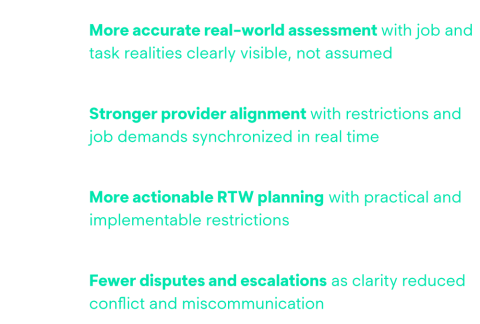
- The provider issued clearer, task-based restrictions tied to observed demands and not generic light duty.
- The employee returned to modified duty with more confidence because the job visibly matched restrictions.
- The employer was pleased with the consultative suggestions to improve the modified position and getting the injured employee back at work.
- Sustained return to work with progression from modified to full duty resulting in 75 business days saved when benchmarked against ODG.
$60K in indemnity savings
6. Social Determinants of Health (SDoH) Are Easier to Spot and Solve
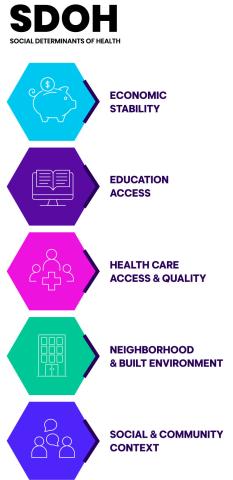
Complex recovery isn’t just about what the injured employee knows; it’s about what they can do. A field case manager can quickly identify and problem-solve real-world obstacles like transportation issues, home layout, caregiver capacity, or jobsite demands. Addressing these factors upfront helps prevent unnecessary delays and improves recovery timeframes.

Case Study
Home visit reveals social determinants of health barriers and prevents an unsafe discharge, enabling a safe transition-of-care plan
A 58-year-old maintenance technician sustained a complex ankle fracture, underwent ORIF (Open Reduction and Internal Fixation) surgery, and was discharged with non-weight-bearing orders, anticoagulant medication, and multiple orthopedics and PT follow ups. On paper, the discharge plan looks complete: walker, home health, and follow-up in 7–10 days.
A field case manager was assigned to assist in transition of care planning, including a home assessment, uncovering several SDoH that directly affected safety and adherence:
- Environmental barriers: the only bathroom was upstairs; no handrails; a narrow hallway prevented safe walker use; loose rugs created fall hazards.
- Caregiver capacity: spouse worked nights and slept during the day; limited ability to assist with transfers.
- Transportation barriers: the employee couldn’t drive and had no reliable daytime transportation for follow-ups.
- Medication/health literacy risk: the employee misunderstood the anticoagulant instructions and planned to take it only when needed.
The case manager then built a safe transition-of-care plan in real time:
- Coordinated rapid delivery of appropriate DME plus a bedside commode to avoid stairs.
- Arranged home health and PT timing around caregiver availability and ensured the injured employee understood instructions on meds and wound care.
- Helped remove fall hazards and created a first-floor living setup until weight-bearing restrictions changed.
- Coordinated transportation resources for follow-ups and confirmed appointment scheduling while present.
- Communicated the updated barrier log and home safety findings to the treating team so the plan matched reality.
- Provided extensive education around what to expect post-surgery and discharge including medication safety.
- A home visit was made the day of discharge to ensure all needed services were in place and the field case manager kept in close contact with the injured employee to ensure proper medication usage.
Proven Results
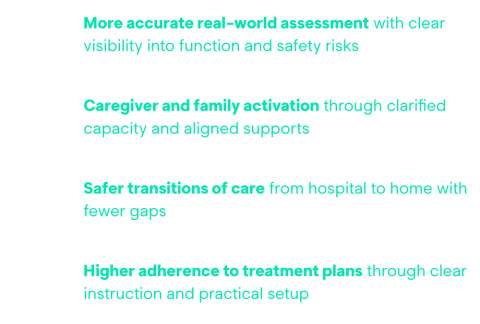
- Reduced the likelihood of falls, missed follow-ups, and medication errors that are common drivers of complications and readmissions.
- Improved adherence because the plan became doable in the injured employee’s environment.
- Reduced caregiver strain and prevented failure of the discharge plan.
- Created a clear documentation trail showing risks identified and mitigations implemented.
- Reduced the risk of hospital readmission due to complications such as blood clots, medication confusion, and infection due to improper wound care.
- All ancillary services were coordinated through the client’s preferred provider.
7. Care Transitions Are Safer and Smoother
Every handoff from hospital to rehab and home is a potential point of failure. In-person coordination during these transitions ensures critical information isn’t lost, services aren’t delayed, and no one’s left wondering, “Who’s doing what next?” Face-to-face coordination reduces avoidable readmissions, accelerates the delivery of needed medical equipment and smooths the path toward returning to work.
8. In-Person Support Prevents Stakeholder Misalignment
Catastrophic claims typically involve a team of physicians, therapists, facilities along with family members, adjuster and even attorney involvement. Miscommunication among these players can derail progress. A field case manager acts as the central hub, aligning all stakeholders in real time to ensure cohesive, consistent and compassionate care.
9. Field Case Managers Can Rebuild Confidence
Fear of re-injury, job loss, or the unknown is a powerful predictor of prolonged disability. Field case managers can defuse this fear through physical presence, clear RTW discussions and jobsite evaluations that clarify transitional duty options. When injured employees feel supported, their motivation and participation improve dramatically.

Case Study
Field support reduces fear of returning to work and prevents prolonged disability after witnessing a traumatic event
A 29-year-old retail associate witnessed a violent armed robbery at work.
She wasn’t physically injured beyond minor bruising during the incident, but she developed anxiety and insomnia at the thought of returning to work. She began missing appointments and was difficult to reach by phone, partly due to avoidance.
Early Risk Signals
By phone, the injured employee minimized symptoms and said she’s fine, but her voice trembled and she frequently changed the subject. The adjuster and supervisor focused on no objective injury, while the employee felt misunderstood and unsafe. The claim was at high risk of drifting into delayed recovery because of the barriers of psychological safety and trust. At this point, the claims team engaged a field case manager.
The field case manager met her in person at a neutral location first, then used a graded, supportive return-to-work approach:
- Established rapport and credibility through calm presence and nonverbal reassurance (slowed pace, active listening, grounding techniques).
- Coordinated a behavioral health evaluation and reinforced that distress responses after trauma are treatable and common, reducing stigma and negative thoughts.
- Created a stepwise exposure return-to-work plan with the employer and provider:
- Day 1–2: employee returned for a short shift during a low-traffic time, assigned to back-of-house tasks.
- Day 3–5: gradually increased time on the sales floor with planned breaks.
- When it came time to return to work, the field case manager accompanied the employee on-site for the first two days, arriving together, walking the workspace, and ensuring the employee knew where to go if panic symptoms spiked.

- The case manager also met briefly with the supervisor to clarify expectations: the goal was psychological safety and progressive reintegration.
- The employee’s anxiety decreased because she had a trusted person physically present during the highest-stress phase.
- Engagement improved: she attended follow-ups and participated in coping strategies because she felt believed and supported.
- The employer gained a practical, observable plan that balanced productivity with safety, reducing frustration.
- The claim avoided a common spiral—avoidance that leads to isolation, worsening symptoms, and prolonged disability.
Proven Results
- Faster trust and rapport built through presence and nonverbal cues.
- Better motivation and engagement sustained by human connection during setbacks.
- Earlier detection of psychosocial risk such as fear and anxiety.
- Improved RTW trajectory by reducing fear and increasing perceived support.
- Reduced escalation as employee felt heard and employer understood the plan.
Sustained return to work resulting in $12K indemnity savings
10. Several Jurisdictions Require Face-to-Face Intervention
While not universally mandated, several jurisdictions such as Tennessee, Georgia, and Florida MCO, have regulatory language requiring face-to-face intervention on catastrophic claims. But beyond regulatory compliance, the consistent thread is this: better engagement leads to better outcomes. And nothing engages like a case manager who shows up, in person, ready to walk the recovery journey with the injured employee.
Conclusion
As these case studies show, field case management is about presence. It meets the injured employee where they are physically, emotionally, and medically and guides them forward with clarity and compassion. In a time when health care complexity is rising, and psychosocial barriers are increasingly driving claim outcomes, face-to-face case management isn’t a luxury, it’s a necessity.