

Nikki Wilson, Pharm.D., MBA
Senior Director, Clinical Pharmacy Services
Download the Snapshot
Overall Prescription Trends Reflect Decreased Cost per Claim in 2025
Overall cost and utilization by claim were down in 2025 even with 6 of the top 10 therapeutic classes experiencing rising cost per script. Migraine medications rose by nearly 10%, representing the largest script cost gains driven in part by increases in brand Average Wholesale Price (AWP) with brand AWP for migraine medications increasing 2.4%. Utilization per claim also jumped in the migraine medication class (up 9.6%), while every other class within the top 10 (besides topicals, which rose 2.5%) experienced decreased utilization.
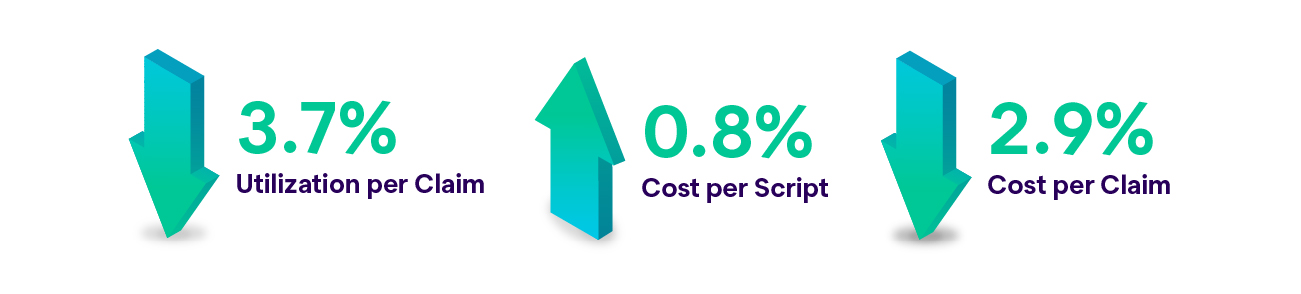
Migraine medications broke into the top 10 therapeutic classes by cost in 2022 and climbed to #6 in 2025 (up from #7 in 2024). Topicals have consistently ranked among the top 10 therapeutic classes by cost within the last few years and moved to the #3 spot (up from #4 in 2024).

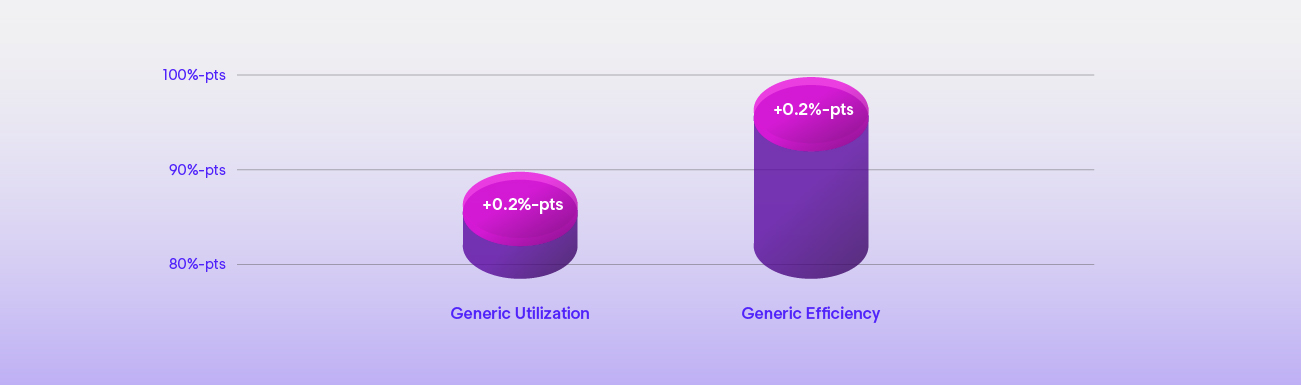
Generic utilization increased 0.2%-pts. from 89.6% to 89.8% of all prescriptions. Generic efficiency increased 0.2%-pts. from 99.5% to 99.7%.
Opioid Usage Continued to Decline in 2025, Maintaining a Consistent Downward Trend
All opioid categories experienced decreases in utilization, including sustained-release opioids which dropped 13% in 2025 as supported by prescribing guidelines.

All opioid categories experienced decreases in utilization, including sustained-release opioids which dropped 13% in 2025 as supported by prescribing guidelines.
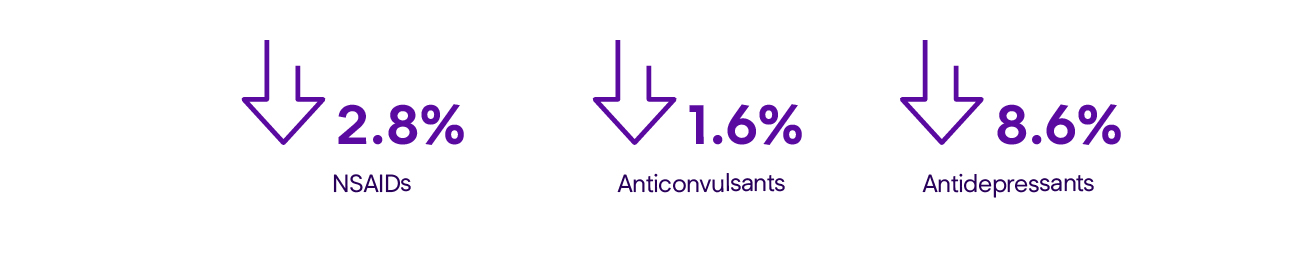
Opioid alternatives commonly-prescribed to manage acute and chronic pain also saw decreased utilization per claim, although most to a lesser degree than opioids.
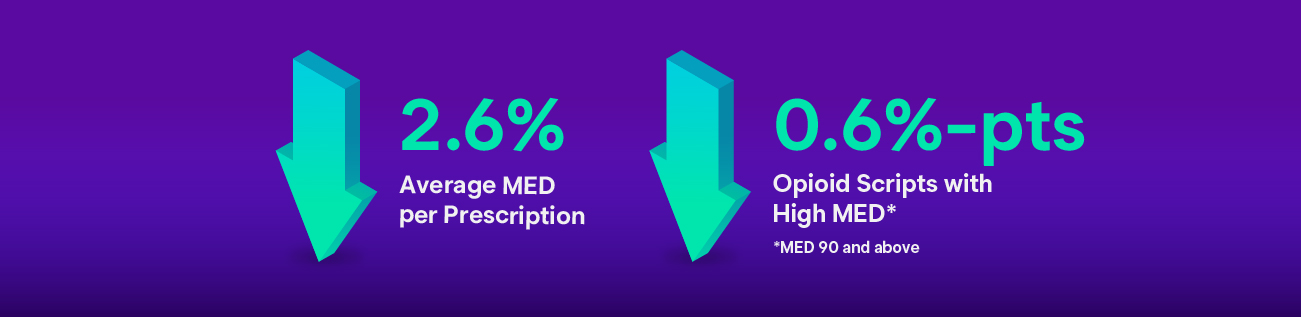
Average Morphine Equivalent Dose (MED) and High MED Scripts Continue to Decline for the 11th Consecutive Year
Specialty Medications
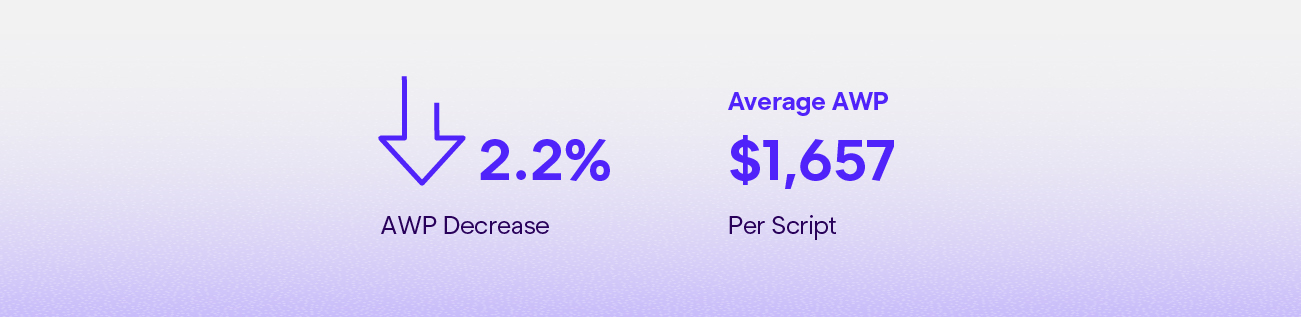
While specialty medications have low utilization, they are of particular interest due to their significant costs. Specialty spend as a percentage of overall prescription spend has continued to rise and has tripled over the past seven years (from 5.9% in 2018 to 18.1% in 2025).
*Values have been revised to reflect updated specialty drug list including additional NDCs, HCPCs, and CPT identifiers.
Specialty Average Wholesale Price (AWP)
Specialty Makeup

Average Wholesale Price (AWP) Trends
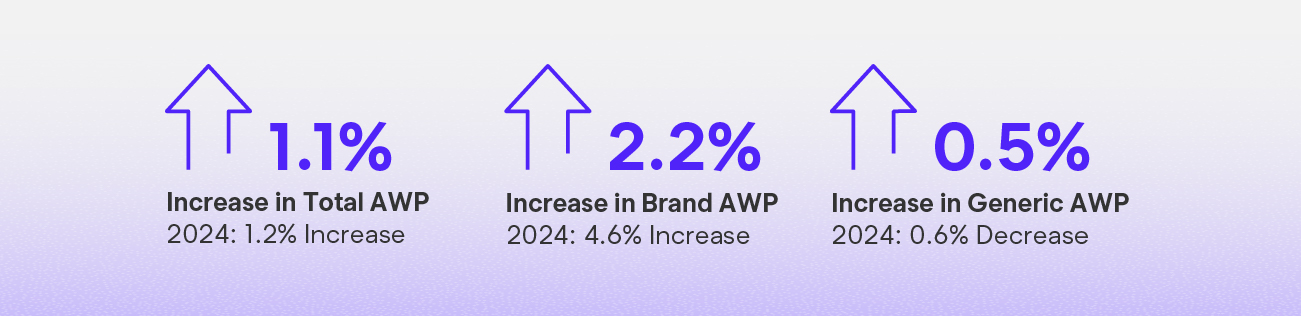
AWP increases continued in 2025, although to a slightly lesser degree than the previous year.
The largest difference in AWP in the top 5 therapeutic classes by brand costs was reflected by the short-acting opioid class, which saw a 12.4% increase in brand AWP. Brand Sustained-Release also saw a significant increase of 6.9%
Top Therapeutic Classes by Number of Prescriptions
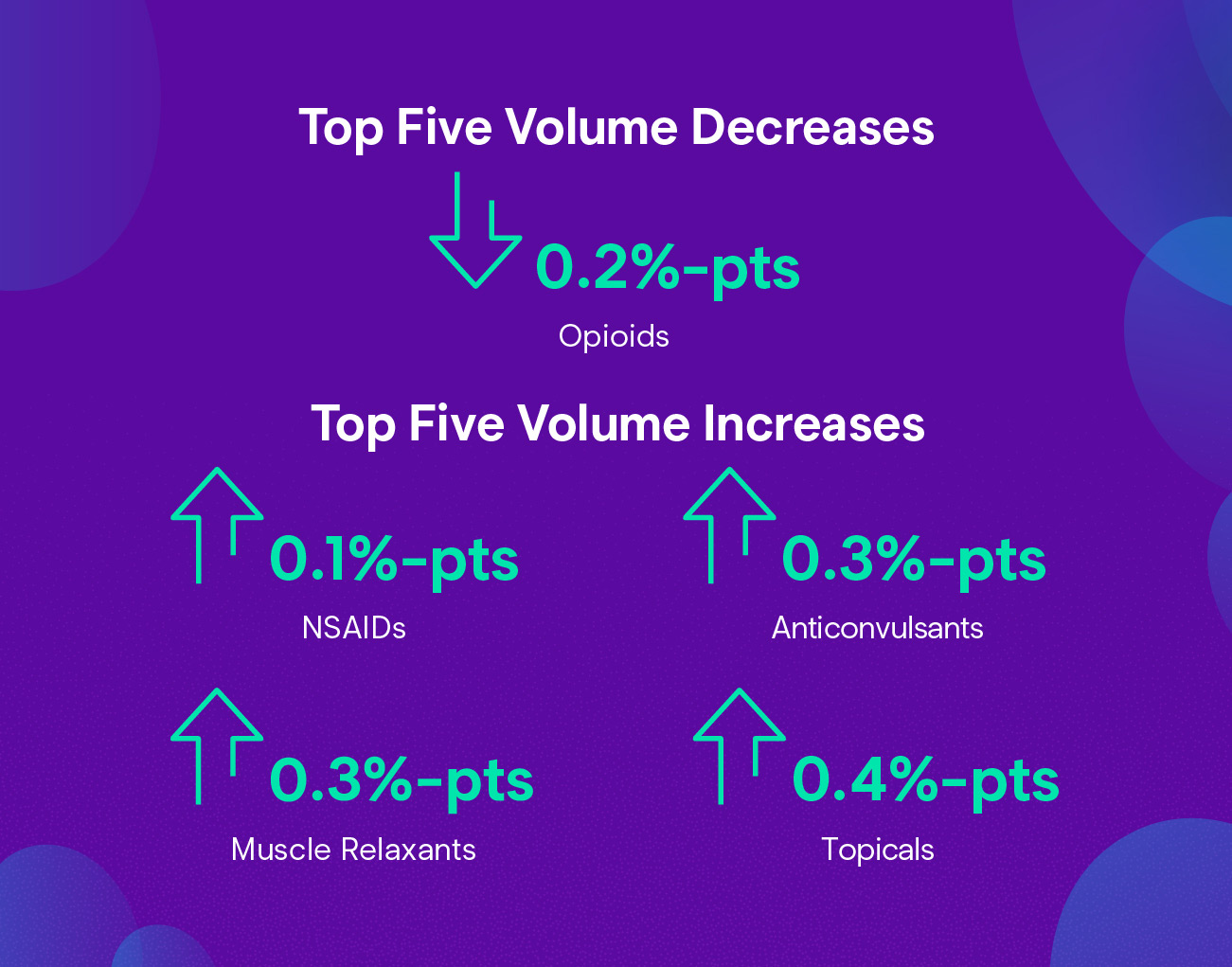
Opioid prescriptions were down but remain #1. Prescriptions for one of the top five classes were down by volume.
Top Five Classes
- Opioids
- Nonsteroidal Anti-Inflammatory Drugs (NSAIDs)
- Anticonvulsants
- Muscle Relaxants
- Topicals
These five classes represent the majority of total scripts and costs at 61.0% of volume and 46.0% of cost.
Other classes represented in the top 10 include non-tricyclic antidepressants, gastrointestinal, cardiovascular, respiratory, and migraine medications.
*Represents portion of total script volume across all classes.
Want the full view of workers’ comp pharmacy trends?
Explore Enlyte’s 2026 Drug Trends Analysis series for insights on retail and mail-order prescriptions, opioids, topicals, specialty medications, network patterns, and more.
Methodology Statement
This information is based on all 2025 calendar-year retail and mail-order transactions billed through Enlyte’s Pharmacy Benefit Management (PBM) program to provide a more complete and accurate analysis.