


Jim Harris
Vice President, Analytics & Reporting
2025 Behavioral Health Study: Impact of Behavioral Health Treatments on Lost Time Workers’ Compensation Claims
This study looked at all lost-time (LT) claims with dates of injury 1/1/2025–12/31/2025, valued at 15 months (3/31/2026) to determine the impact of behavioral health treatments on workers’ compensation claim costs.
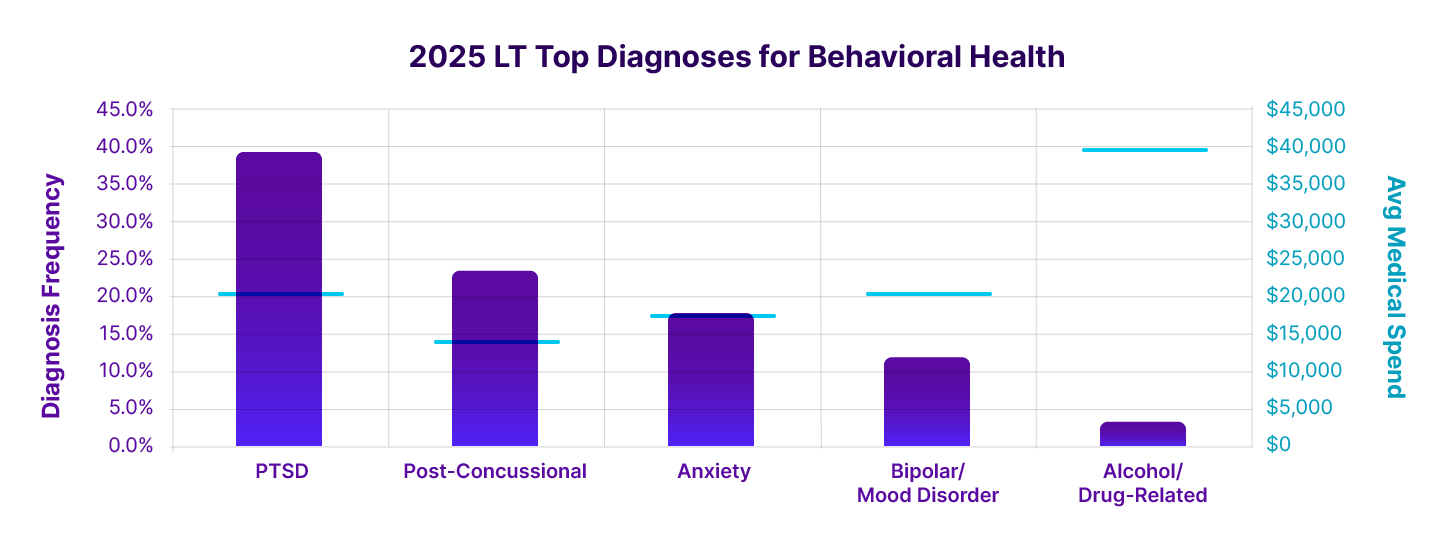
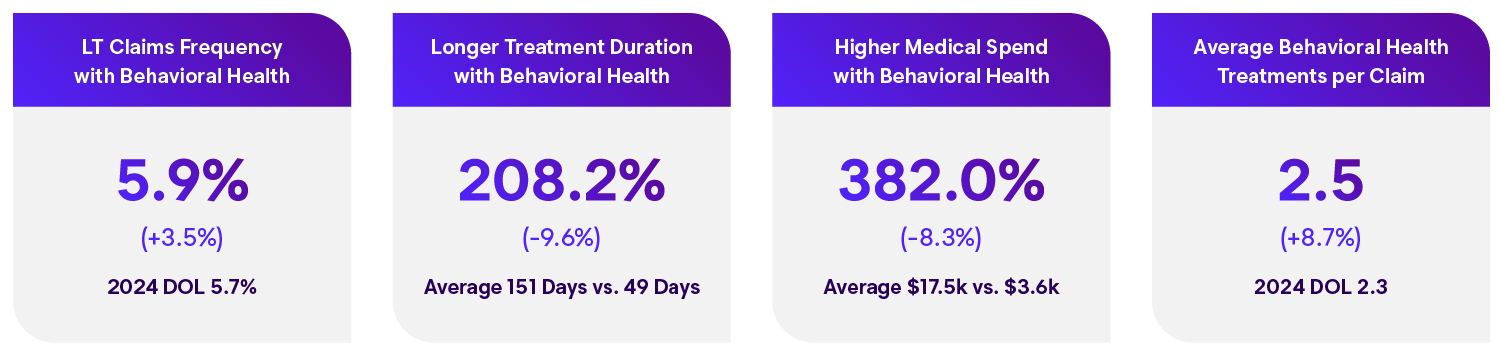
We looked at the impact of behavior health treatments (identified by diagnosis and/or CPT treatment codes) on the total medical costs of claims, the total medical treatment duration days, and the frequency of the different types of behavioral health diagnoses.
Insight
LT Claims with Behavioral Health treatments have nearly 4x medical costs & over 2x treatment durations compared to LT claims with no BH treatment.
Top Behavioral Health Diagnoses
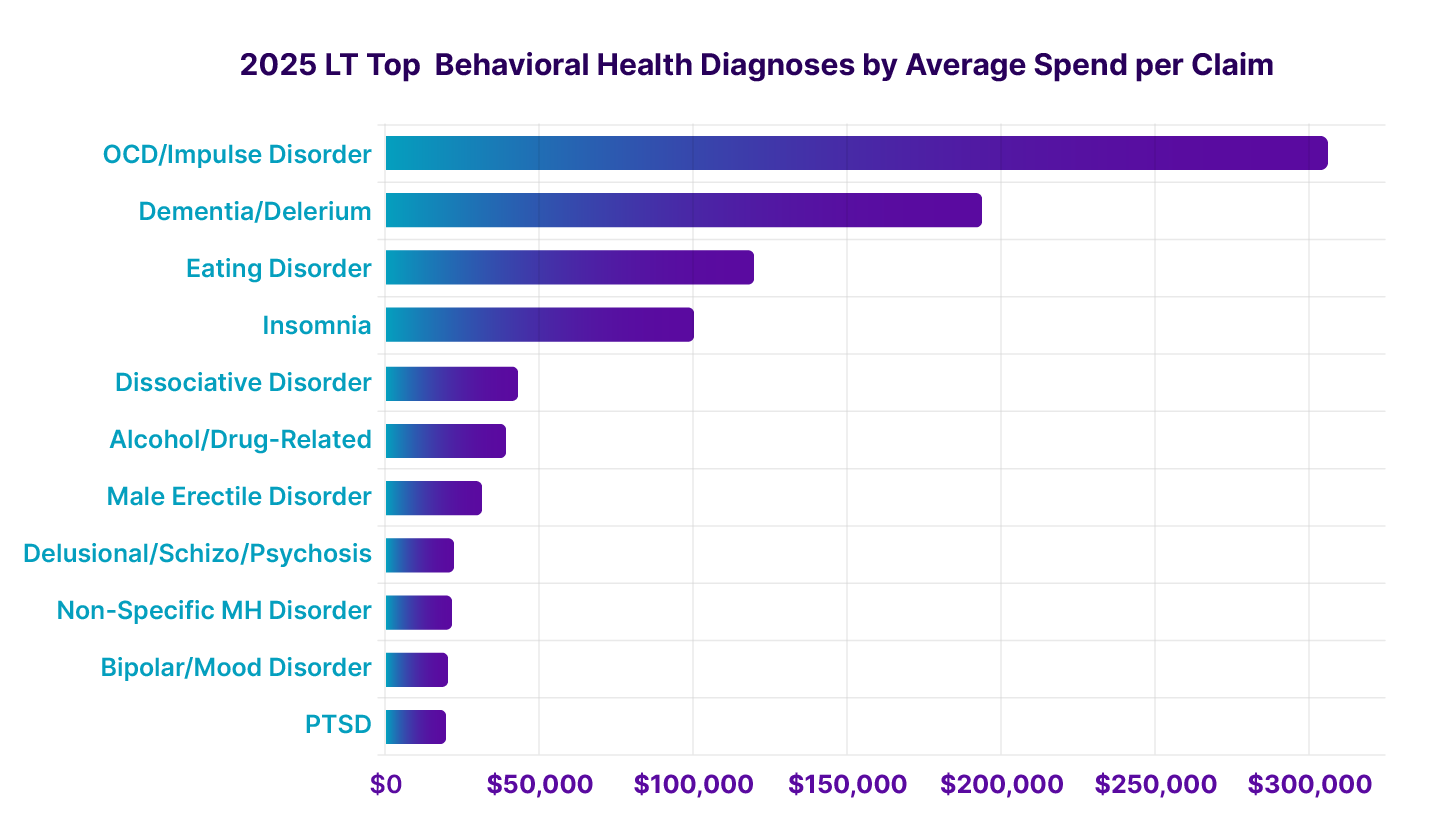
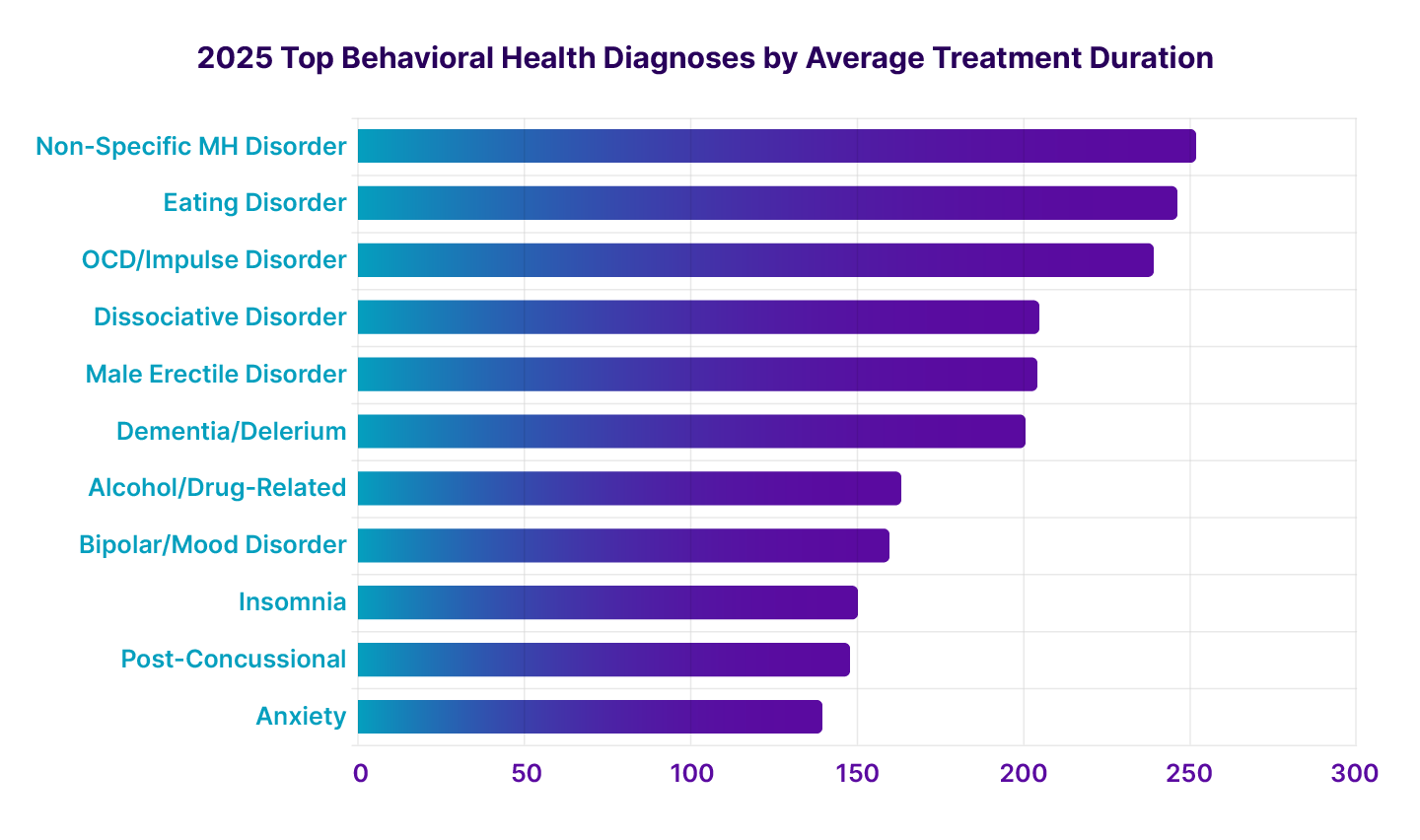
Understanding the impact of behavioral health diagnoses on medical spend and treatment duration.
Insight
Claims involving psychiatric conditions such as OCD/Impulse Disorders & Dementia/Delirium represent significant cost drivers, with average medical expenses averaging $200k–$300k per claim.
Fortunately, these high-severity diagnoses occur infrequently, representing 0.3% of the population of behavioral health claims.
Insight
Medical treatment duration on behavioral health claims averages 5–8 months for the top diagnoses.
Workers’ Compensation Case Management Claims
Confounding Factors in Case Management
Confounding Factors Study
Enlyte analyzed 42k telephonic case management (TCM) Managed Full cases and 51k field case management (FCM) full cases in 2025 reviewing comorbidities and confounding factors to determine the impact on case management claims.
When assessing both TCM and FCM cases:
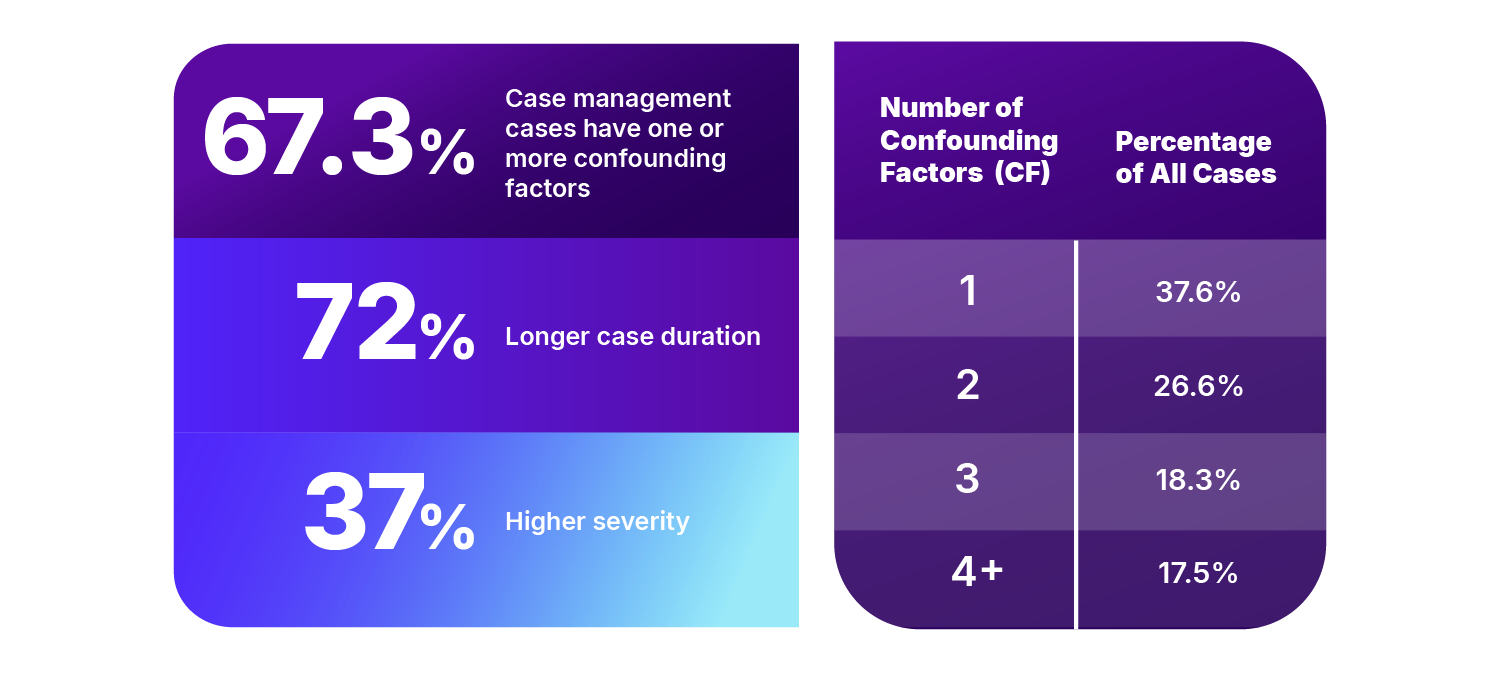
- 67.3% of case management cases have one or more confounding factors (62,469 out of 92,754 total cases)
- Severity (avg. severity score) for cases with confounding factors is 37% higher than cases without (58.7/100 vs 80.5/100)
- Case duration (avg. days open) for cases with confounding factors is 72% higher than cases without (114 days vs 197 days)
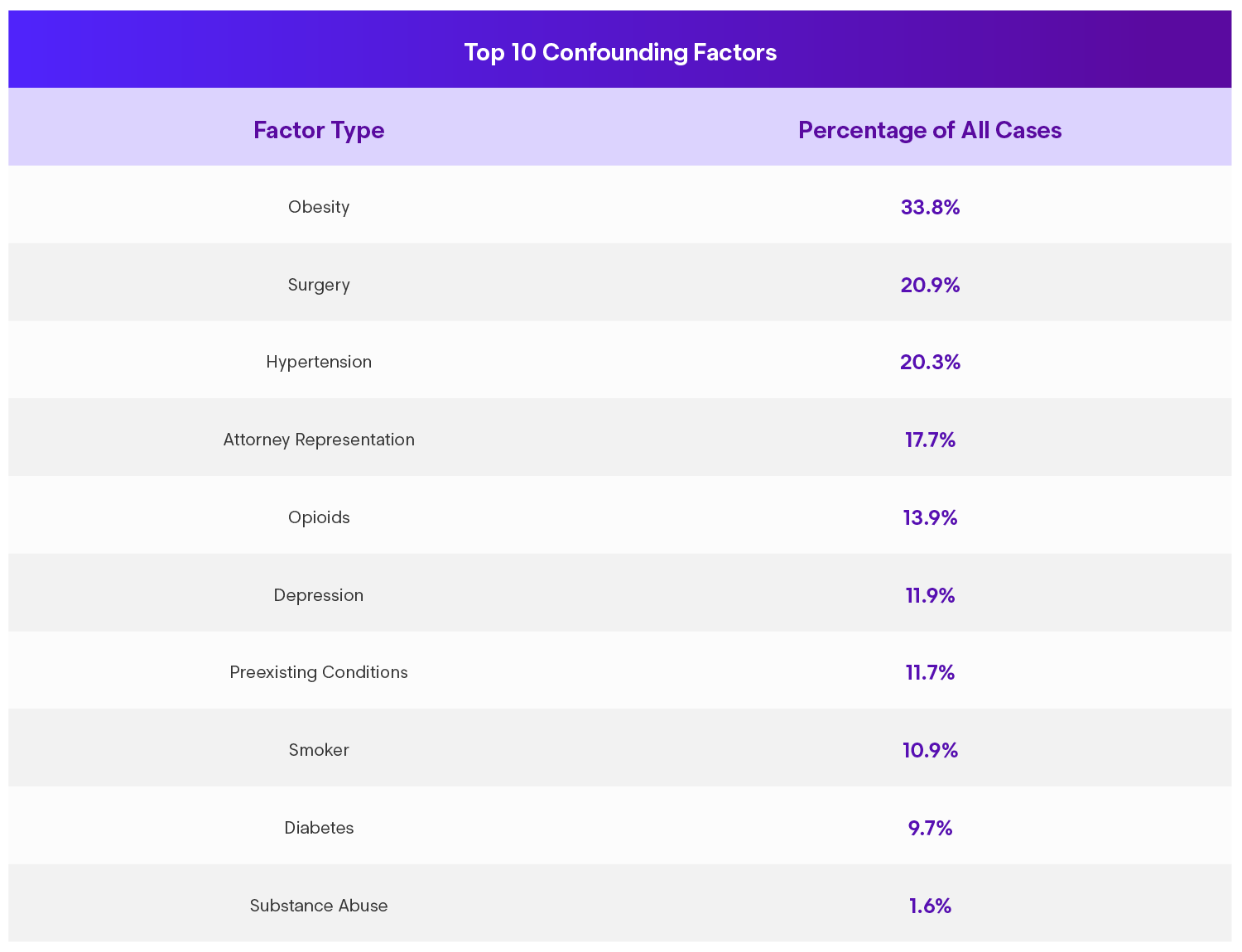
Obesity was recorded in 33.8% of all cases, making it the #1 comorbidity for all of case management in 2025.
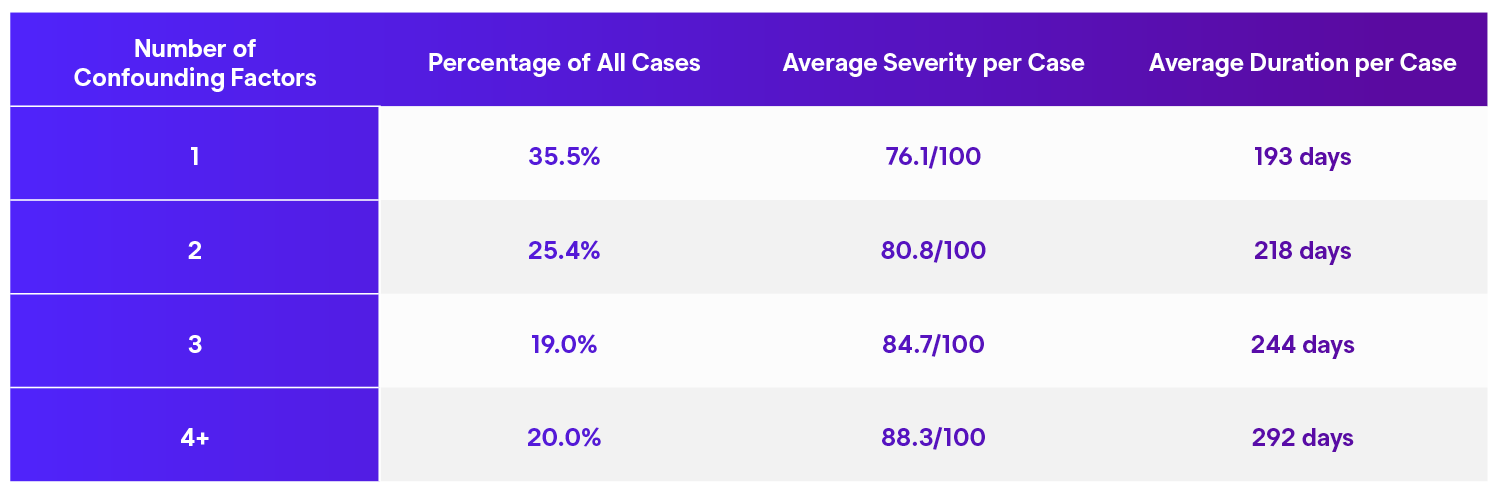
Impact of Multiple Confounding Factors on FCM Full Medical Cases
Not surprisingly, the costs and duration of FCM cases increase steadily as more confounding factors occur on a claim, increasing nearly 15%–20% for each additional confounding factor.
Insight
The greater the number of confounding factor, the greater the severity.
Workers’ Comp: Florida Fee Schedule Impact
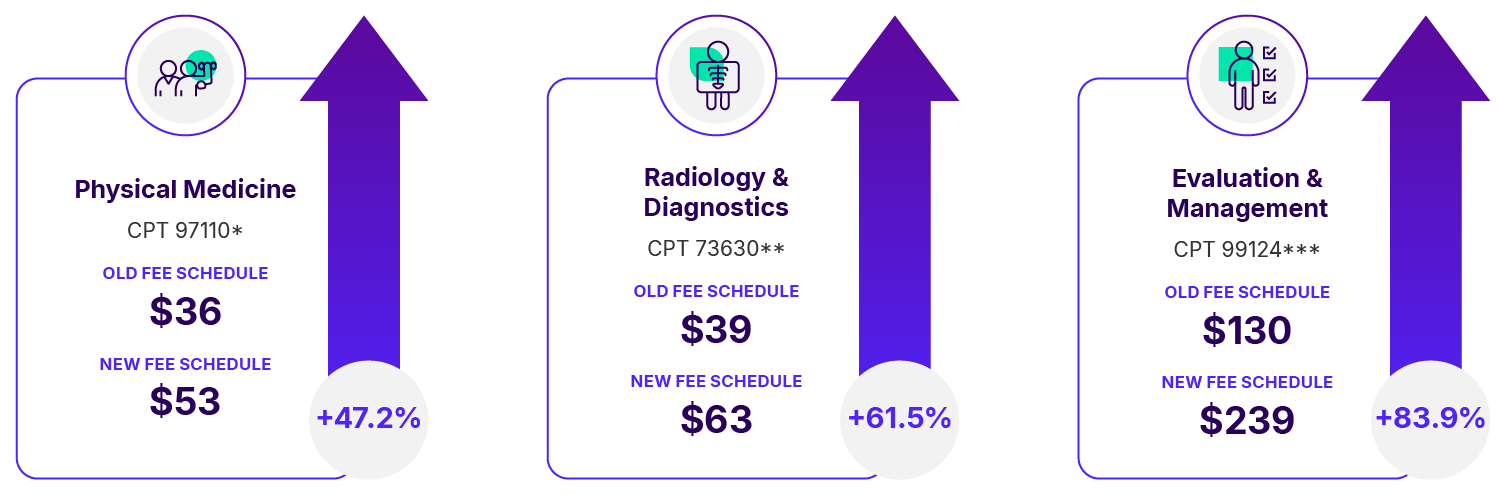
The Florida Division of Workers' Compensation implemented substantial fee schedule increases for non-hospital medical services, effective for all treatments provided on or after January 1, 2025. Florida’s reimbursements vary based upon three different reimbursement localities.
Common Non-Hospital Utilization Categories and CPT Codes
Insight
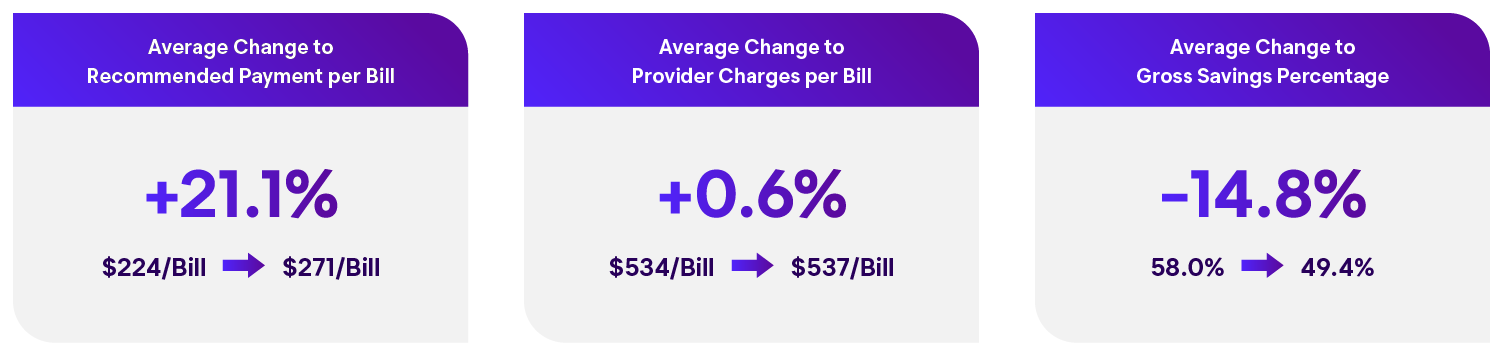
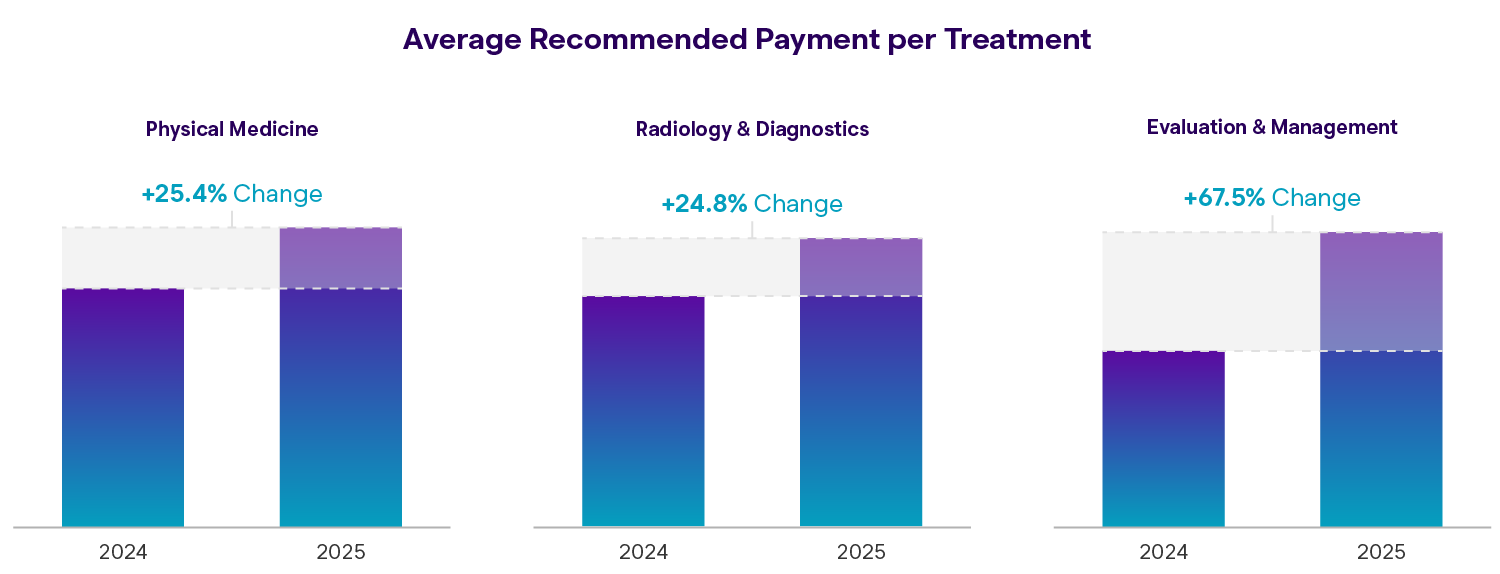
Data analysis reveals a 21.1% increase in the BOB average recommended reimbursement per non-hospital medical bill following the implementation in 2025.