

Introduction
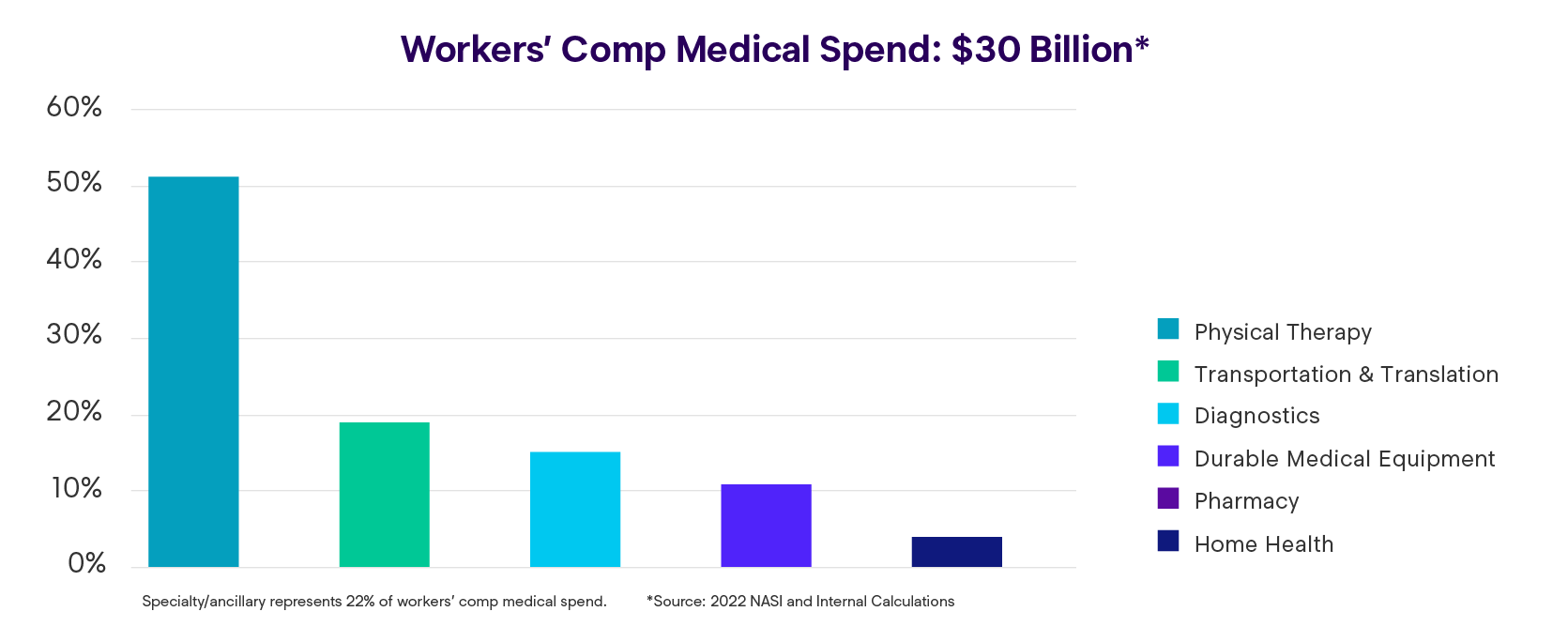
Often coming back from a work-related injury doesn’t unfold in a straight line. Those injured may need an array of specialized supports to achieve the best outcome and potentially return to a productive life. Nearly half of workers’ comp claims result in medical expenses ranging from $10,000 – $500,000 with high-cost claims accounting for a larger share of spending. Specialty services represent 22% of this spend and are pivotal to any recovery. These specialties include products and services such as durable medical equipment (DME), diagnostic imaging, physical medicine, home health and transportation and translation, to name a few.
Effective management of specialty networks is one area where we can make a significant impact and must be managed for a variety of reasons, including outsourcing to an expert in that field, ensuring appropriate utilization, facilitating greater speed and efficiency to meet injured employees’ needs and controlling cost. Here are ten elements of these specialty solutions that can have major implications on patient recovery and an overall workers’ compensation program.
Table of Contents
1. Specialty Works in Conjunction With Traditional Networks
2. Durable Medical Equipment (DME) Requests Can Be Complicated
3. Home Modifications Make Injured Employees Feel More at Home After an Injury
4. As Prosthetic Devices Improve, So Can Injured Employee Outcomes
5. Access to Accurate Diagnostic Imaging Affects Not Only Quality of Care but Claim Costs
6. Physical Medicine Can be Foundational in Return to Work
7. Reliable Transportation Facilitates Better Injured Employee Outcomes in Unexpected Ways
8. Translation Services Are a Fundamental Element to Managing Language Barriers
9. Despite Shortages Home Health Remains a Critical Element of Care for Many Injured Employees
10. Hospital Discharge Planning Is an Integral Part of the Transition to a Facility or Home
Takeaways
Number 1
Specialty Works in Conjunction With Traditional Networks
Specialty services are often foundational to employees’ recoveries and combined with physician networks can add up to a more inclusive recovery experience for injured employees. When the network lens is expanded to include specialty services clients gain the benefit of an array of supports through their existing network relationship. Providers of DME, diagnostics, physical therapy, home health and other services within an extended network can further streamline patient care. The models also offer a single point of contact for all specialty equipment and services, scheduling and clinical oversight, resulting in greater injured employee satisfaction.
Number 2
Durable Medical Equipment (DME) Requests Can Be Complicated
Durable medical equipment, which can include anything from medical equipment and supplies to modification services, rehabilitation equipment and electrotherapy units, can be complex. There is a wide range of equipment and within each category, there are significant numbers of products that vary in nuanced ways, with many offering slightly different functions.
These referrals are mainly requested from treating physicians who may be unaware of the wide variety of equipment available. Physicians may inadvertently write a prescription for a costly brand-name product when a cheaper generic version is available.
From an adjuster’s perspective, the inner workings of providing these services can be shrouded in mystery. Adjusters need to rely on knowledgeable specialty coordinators to review orders on their behalf and bring any concerns to their attention. Successful specialty solutions also tailor their service and delivery to help eliminate administrative hassles.
DME specialty coordinators work in close collaboration with case managers to ensure clinical oversight is applied when needed. Many times, injured employees require medical and specialty services together. As a result, a coordinated approach ensures better overall results, value and savings.
DME coordinators offer a single point of contact for all equipment and services, handle all fulfillment and billing and work exclusively with dedicated, cost-conscious vendors nationwide to meet the needs for virtually any type of case. These programs can also deliver outstanding results related to network penetration, savings, decreased out-ofnetwork activity and injured employee satisfaction.

Number 3
Home Modifications Make Injured Employees Feel More at Home After an Injury
Home modifications, which involve everything from installing railings, ramps and high-seat toilets to widening doorways to accommodate wheelchairs, are just one aspect of the out of the box benefits a specialty solutions provider can deliver.
When planning home modifications, it’s essential to really understand the individual’s needs. A good specialty coordinator will start by gathering high-level information from the injured employee and their family members to understand the employee’s needs for managing daily activities. Seeing a home also helps answer numerous questions including items like the width of various doorways, the size of bathrooms and how well the injured employee might be able to move from room to room.
An occupational therapist can also play a critical role in helping identify the injured employee’s needs and mapping out what interventions are most likely to be successful in meeting needed requirements.
In addition, injured employees who feel they are a part of the process are more likely to believe the resulting alterations will enable their activities of daily living. That resulting sense of self-sufficiency can help drive better injury outcomes.
Relying on a specialty provider capable of executing home modifications is important because it can be difficult to identify reputable occupational therapists and other experts within a region who can determine which modifications are necessary. Having vendors that are experienced and regularly evaluated in performing such work can help ensure changes to an injured employee’s living environment are done correctly and in a timely manner to meet the ultimate goal of improving an injured employee’s day-to-day ability to function.
Adjusters can also place confidence in a specialty provider to coordinate the injured employee’s needs across various touchpoints, obtain several quotes, check references to ensure the quality of the work and estimated price and work with several contractors to ensure an overall cost-effective modification is performed. In addition, adjusters want cost transparency and may want estimates broken down by material and labor, to know project costs by room, and to know how much flooring costs. It’s also important to realize that the payer’s role is to make modifications that accommodate the employee’s injury, but at a level comparable to what was in place before the modification.

Number 4
As Prosthetic Devices Improve, So Can Injured Employee Outcomes
Amputations are the most costly type of injury in workers’ compensation, both in terms of lost time and long-term expense. Working with experienced prosthetic providers is therefore critical to control costs and achieve the best possible outcomes for each injured employee. Manufacturers may specialize in certain types of prosthetics, so having a robust specialty network will ensure a wide array of potential providers. In addition, each injured employee must receive complete, comprehensive evaluations to assess their unique needs, and to support not just their return to work but also their hobbies and lifestyles.
While orders for prosthetics are rare compared with other types of specialty devices their costs can range from a couple thousand dollars to well over $50,000. Prosthetics are classified under DME and are often among the most expensive, long-term costs in specialty services. Injured employees might have to wait six months to a year or more for swelling to subside before they can be properly fitted for their prosthetic; some will need additional surgery or therapies to prepare. Some injured employees will need a new prosthetic as time passes and disabilities progress or change. And no prosthetic lasts a lifetime, so replacements will eventually be necessary. Additionally, each prosthetic is custom-made and often requires multiple moldings and adjustments. Much planning is needed to avoid wasting money on recasting or excessive wear and tear. Reliable providers will also offer maintenance and warranties and a quality specialty vendor will routinely check in with the injured employee to make sure a prosthetic is in good repair and in compliance with its warranty.
In many cases, because of the nature of a catastrophic injury like an amputation, the injured employee has already been sent to the hospital. Typically, a specialty service provider is brought on early in the process to work with the care coordinators to begin communicating with key stakeholders. This may include the adjuster, treatment team, discharge staff, or catastrophic case manager to ascertain the injured employee’s services, equipment and supply needs.
Amputations can also carry significant, lifelong feelings of grief and finality and the psychological and emotional benefits to returning the injured employee to their perception of their old self cannot be overstated. On a positive note, the advancement in prosthetics over the years is nothing short of astonishing. For injured employees, seeing themselves with their future prosthetic, resuming their everyday lives, can not only improve the grieving process but also their chance of rejection. In the future, the amazing developments in technology will provide even better solutions to the traumatic events of amputation and improvements to prosthetics.

Number 5
Access to Accurate Diagnostic Imaging Affects Not Only Quality of Care but Claim Costs
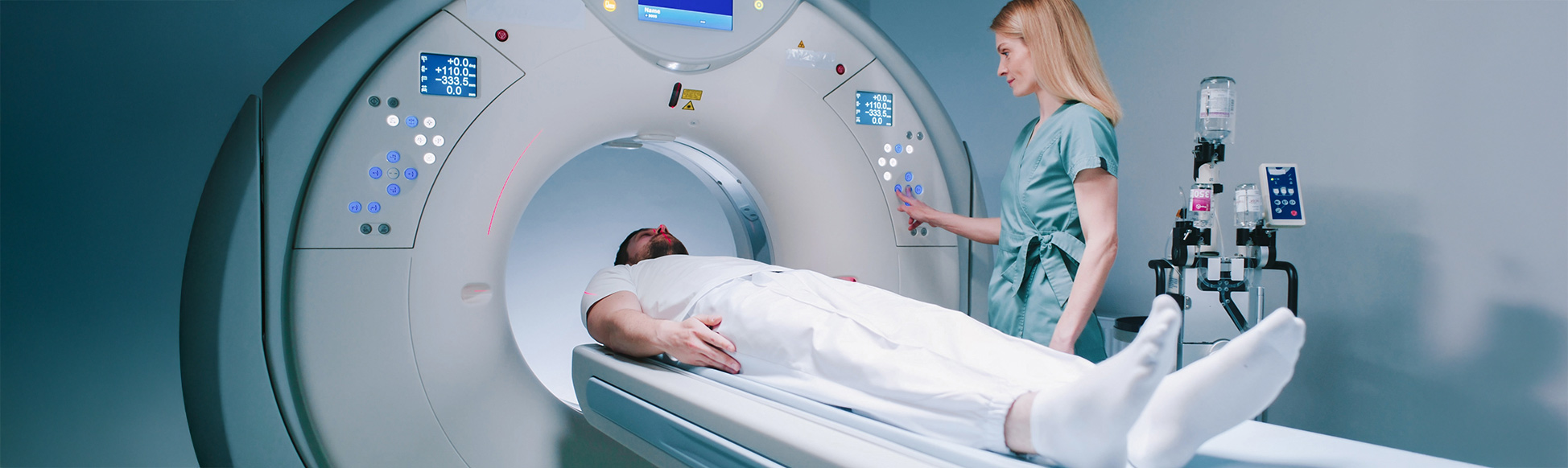
Diagnostic imaging and radiology play a significant role in workers’ comp claims. Diagnostic imaging such as an MRI, CT, or PET scan is often the first critical step to assess the severity of an injury and develop a treatment plan for prompt recovery and return to work. That’s why it’s imperative an imaging facility produces a quality image from the onset to ensure the best-possible outcomes for injured employees.
Specialty solutions offer expedited access to a wide range of diagnostic facilities, equipment and procedures to assist physicians, nurses and adjusters as they return injured employees to function and work. Upon referral receipt, a dedicated care coordinator promptly contacts the injured employees, the most appropriate facility and schedules the requested studies.
Today, obsolete imaging equipment has become an issue and injured employees who require a scan could be sent to an imaging facility with old or outdated equipment, especially if that facility or equipment is not properly vetted. Treating physicians may not have detailed information to diagnose and properly treat injured employees, or a bad scan could cause them to miss important diagnostic information for the injured employee’s condition. Unfortunately, the financial investment for newer machines is extremely high, creating a substantial barrier to ongoing equipment renewal that would aid in the market.
Despite this shortcoming, imaging advancements offer great promise. The latest equipment can enable health care providers to diagnose and treat patients with greater precision, giving them unprecedented visual and functional information on a patient’s condition. At the same time, newer equipment facilitates faster, more intelligent imaging services that support medical decision-making and improve outcomes.
Specialty solutions providers have vetting processes for diagnostic facilities to ensure they have up-to-date equipment that is capable of producing quality scans. Specialty coordinators are also able to arrange services with adjusters to schedule imaging services within a network of reputable imaging facilities, which have undergone rigorous credentialing to ensure the practice and staff have the proper licensure, certifications, and insurance.
Number 6
Physical Medicine Can be Foundational in Return to Work
Physical medicine covers a wide range of services that help injured employees regain strength, mobility and function. Physical therapy is often the foundation, while other services address specific conditions and recovery goals. Specialties including acupuncture, aquatic therapy, certified hand therapy, chiropractic care and occupational therapy expand treatment beyond standard physical therapy to address unique injury types. Working with a specialty provider to coordinate the appropriate type of therapy for the employee’s specific injury is critical for timely recovery.
Early treatment also matters. When therapy begins promptly after an injury employees are more likely to regain function sooner and avoid complications that prolong claims. Research shows that starting therapy within the first two weeks shortens disability duration and reduces the likelihood of costly advanced imaging, opioid use and surgery.
Coordinated physical medicine programs follow evidence-based treatment guidelines and track progress through objective measures. They focus therapy on functional improvement and job-specific needs with the goal of getting injured employees back to function and work.
Specialty providers also provide oversight using in-house licensed therapists to verify medical necessity, flag risk and collaborate with the treating provider. These therapists address concerns such as treatment compliance and over‑treatment to ensure injured employees progress toward function and return to work sooner. For payers, monitoring treatment for appropriateness translates into reduced claim costs and better case oversight for adjusters.
When physical medicine is delivered through a comprehensive specialty program offering a single point of contact, it connects seamlessly to diagnostic imaging, transportation, durable medical equipment and home health to provide related services often needed in addition to therapy. This integration supports continuity of care, lowers administrative burdens, and drives better outcomes for injured employees and the teams managing their claims.

Number 7
Reliable Transportation Facilitates Better Injured Employee Outcomes in Unexpected Ways
The importance of transportation in health care outcomes—sometimes an overlooked factor—has been drawing more attention in recent years. One review found that 10 to 51 percent of group health patients cited lack of transportation as a barrier to care.
For many of us, finding a ride is easier than ever. Services like Uber and Lyft have made it simple to summon transportation with a few taps to our phones. But for injured employees, getting from one place to another often remains daunting.
Injured employees often require more complex transportation, such as a scheduled ambulance, wheelchair, stretcher, basic life support, or advanced life support transportation. Without timely and reliable transportation, those in need of medical care can miss appointments and jeopardize the pace of their recoveries, adding up to poorer health outcomes. That’s why it’s essential for injured employees to have access to a network of safe and effective transportation options.
On an average day, specialty providers arrange hundreds of rides for injured employees, typically to appointments such as doctor visits relating to an injury. In addition to safety, specialty network drivers must consider the unique needs of injured employees and be experienced in getting them where they need to go.
Knowing as much as possible about a situation and needs makes it possible to line up the most logical transportation option. In addition, specialty providers regularly reassess what they’re doing and how they’re doing it, routinely meeting with vendors to obtain status updates, to gather and offer feedback and conduct roundtable reviews.
Injured employees can benefit in perhaps surprising ways when they have access to professional transportation companies experienced in workers’ compensation. For example, many services allow injured employees to request drivers with whom they’ve ridden in the past. This extra comfort, though modest in the overall recovery, can carry outsized impact because we know the foundational role that trust plays in the trajectory of an injured employee’s recovery and in the associated costs.

Number 8
Translation Services Are a Fundamental Element to Managing Language Barriers
Translation is one of the most commonly requested and used services for injured employees and specialty solutions can provide certified translators and interpreters to facilitate communication of over 200 languages including American Sign Language. These providers offer a means to easy communication that includes proven customer service to ensure a smooth process for the injured employee, while reducing costs for clients.
Translation is usually done in two forms. Either rewriting documents into a given dialect or translating a live call or office visit. Vendors can translate over the phone, in person, or offline if there’s a document, or can arrange a video conference, such as for sign-language translation. In addition, injured employees needing translation for repeated visits are often able to use the same provider for continuity. Given all this, translation services are an efficient component for helping both the claims and medical process.
Translation is a necessary service for good reason and is often critical to employees’ recoveries. These requests require a fair amount of coordination, especially as more people are involved. Getting everybody scheduled to meet at the same time can be tricky. And there is often an essential time component with translation, because the injured employee’s treatment can depend on receiving services promptly. They need to be able to talk to their caregivers and vice versa. Working with a qualified translation provider ensures that these services are coordinated and provided with the interest of the injured employee in mind.

Number 9
Despite Shortages Home Health Remains a Critical Element of Care for Many Injured Employees
When injured employees are struggling with a difficult transition home, they need compassionate health professionals, who are highly skilled and experienced in caring for those who have experienced a severe or life-altering injury.
Today, there are significant challenges, including persistent staffing shortages, facing home health, which could affect the industry’s ability to meet the needs of injured employees. To proactively address such issues, payers should partner with a respected specialty solutions organization that has a broad national network of home health and home care agencies.
A specialty provider will assist in matching the injured employee’s medical needs to the appropriate skill level required. If necessary, home care coordinators will speak to the treating physician or case manager to get clarification on patient needs. They will assess and facilitate total home care, as well as specialty service requirements, in a comprehensive plan. If possible, they will also speak to the injured employee and family members to assess social, lifestyle and environmental factors that can affect the match. The specialty provider will also ensure that the agencies it works with have a track record of dependability and consistency and appropriate policies in place.
Over time, the specialty provider may consult with the treating physician and case manager to see whether the caregiver skill level can be reduced—perhaps from a nurse to a home health aide—which can help save significant costs, especially over the life of a claim requiring 24/7 care.
Across its many agency partnerships, a reliable specialty provider will have access to a deep bench of expert home health professionals. Due to the volume of business and favorable terms it provides agency partners, it’s able to obtain prioritized handling of its cases. In the end, payers can avoid the scenario where a claims adjuster receives a frantic call from a family member, saying a nurse or home health aide has not shown up. Instead, gaps and disruptions in home care are avoided.

Number 10
Hospital Discharge Planning Is an Integral Part of the Transition to a Facility or Home
Often specialty services, such as home health, transportation, DME and home modifications, are needed on complex injury claims when an injured employee is to be discharged from a hospital or other medical facility. Although adjusters may try to work with these facilities to plan for a release, they often receive last-minute notice of an injured employee being discharged with urgent specialty product and service needs. As a result, it’s quite common to receive a request on a Friday afternoon, making it difficult to fulfill the order and ensure a smooth transition home.
Without a plan to support a successful transition home the injured employee may not be in a position to care for himself or herself at home, transportation to and from appointments might cause concerns, and injured employees could become frustrated with their situation. In addition, safety could be compromised – possibly resulting in re-admission or delays in recovery and return-to-work. Adjusters, who already have a full plate of responsibilities, need the ability to hand off care coordination immediately to a specialty solutions organization that can arrange for needed products and services and set up home health care in a timely fashion.
Prior to discharge, the discharge planning coordinator will work with the case manager and hospital staff to determine the injured employee’s specialty service needs. For instance, does the patient require a skilled nursing facility or an inpatient rehabilitation facility? The specialty service coordinator will know all the types of questions to ask to ensure it understands the patient’s comprehensive needs. For example, the provider will find out if the injured employee requires transportation to the facility and if so, schedule that service as well.
The provider will also assess the type of transportation, such as a wheelchair or even stretcher transport, depending on the severity of the injury.
By providing a single point of contact for all planning, a dedicated coordinator can manage the specific needs outlined by the physician, case manager, social worker and/or hospital and often has a pre-defined checklist of commonly ordered items. In addition, a hospital discharge with proactive planning can produce significant savings.
Takeaways
Understanding the complexities surrounding specialty services enables organizations and claims staff to operate with greater understanding of the intricacies involved. An organization looking to initiate improvements in a specialty service program should assess the partnerships they currently have in place. Is the existing specialty service provider fulfilling your needs in a timely manner? Is it outlining an initial specialty services plan and providing ongoing communication and cost transparency along the way?
Ensure that your specialty services provider has processes in place to deliver not only savings, but also superior service with a patient-centric approach. The service provider should also utilize digital strategies to streamline the specialty service process and provide full visibility to the actions being taken, facilitate oversight to ensure nothing falls through the cracks and have an integrated clinical management approach to ensure optimal outcomes.
Ultimately, when it comes to specialty solutions, adjusters and case managers should feel as if they’re kept “in the know,” so they don’t have to worry about the injured employee. They don’t want to wake up in the middle of the night wondering, “Did transportation get arranged for John to go to his appointment tomorrow morning?” And if an issue arises, the service provider should reach out and let all team members know.
Would you like this emailed to you?
More From Workers’ Comp