

INTRODUCTION
The auto casualty industry is grappling with persistent and intensifying challenges, with rising costs continuing to strain insurers’ resources and profitability. However, beyond the battle against escalating expenses, there is a pressing need to confront inefficiencies and inconsistencies that often create chaos in the auto claims process.
To remain competitive and meet evolving stakeholder expectations, insurers must go beyond incremental improvements. They need to adopt strategic approaches that reduce complexity in claims management and drive meaningful gains in workflow optimization, operational efficiency and customer satisfaction.
Key Drivers of Claims Chaos
Escalating Social Inflation
Social inflation, a term first coined by investor Warren Buffett, has significantly contributed to the rising chaos in the auto casualty industry. It refers to the societal and legal shifts that lead to higher settlement amounts and more frequent claims. Recently, social inflation has taken center stage due to carriers taking record rate increases, causing consumers and regulators to push back. These rate increases have a causal relationship with higher settlement amounts creating havoc on reserving and loss payment patterns.
Factors Contributing to the Rise in Social Inflation
- Social Media Influence
Online platforms are reshaping societal norms and expectations. High-profile cases featuring massive lump-sum settlements have become widely visible, dulling public shock and normalizing large jury awards. The perceived devaluation of money is also influencing juror behavior and verdict amounts. - Corporate Accountability Sentiment
There is a growing public sentiment to hold corporations financially accountable for perceived harm. This accountability is increasingly being enforced through litigation, resulting in rising liability costs. - Tort Law and Legal System Changes
Modifications to civil justice rules have opened new avenues for plaintiff attorneys, making it easier to initiate and sustain lawsuits. - Industry Consolidation
Mergers and acquisitions in key sectors such as health care, real estate and transportation often result in higher policy limits. These increased coverage limits can lead to more substantial claims and settlements.
Surging Claim Severity
Claim severity refers to the increasing cost and complexity of individual claims. LexisNexis reports claim severity in auto casualty has been rising over the last decade and driving up overall loss costs by as much as 25%. With more expensive vehicle repairs, escalating medical costs and longer repair times due to supply chain issues, insurers must manage these factors effectively to maintain control over their claims processes.
Medical inflation and provider shortages continue to put pressure on the industry with an increase in physician charges year over year. Since Q1 2020, physician charge per unit in the third-party Enlyte Medical Price Index has increased 16-18% in California, Georgia and Texas, while Florida experienced a 5% increase.
Sophisticated Plaintiff Attorney Tools
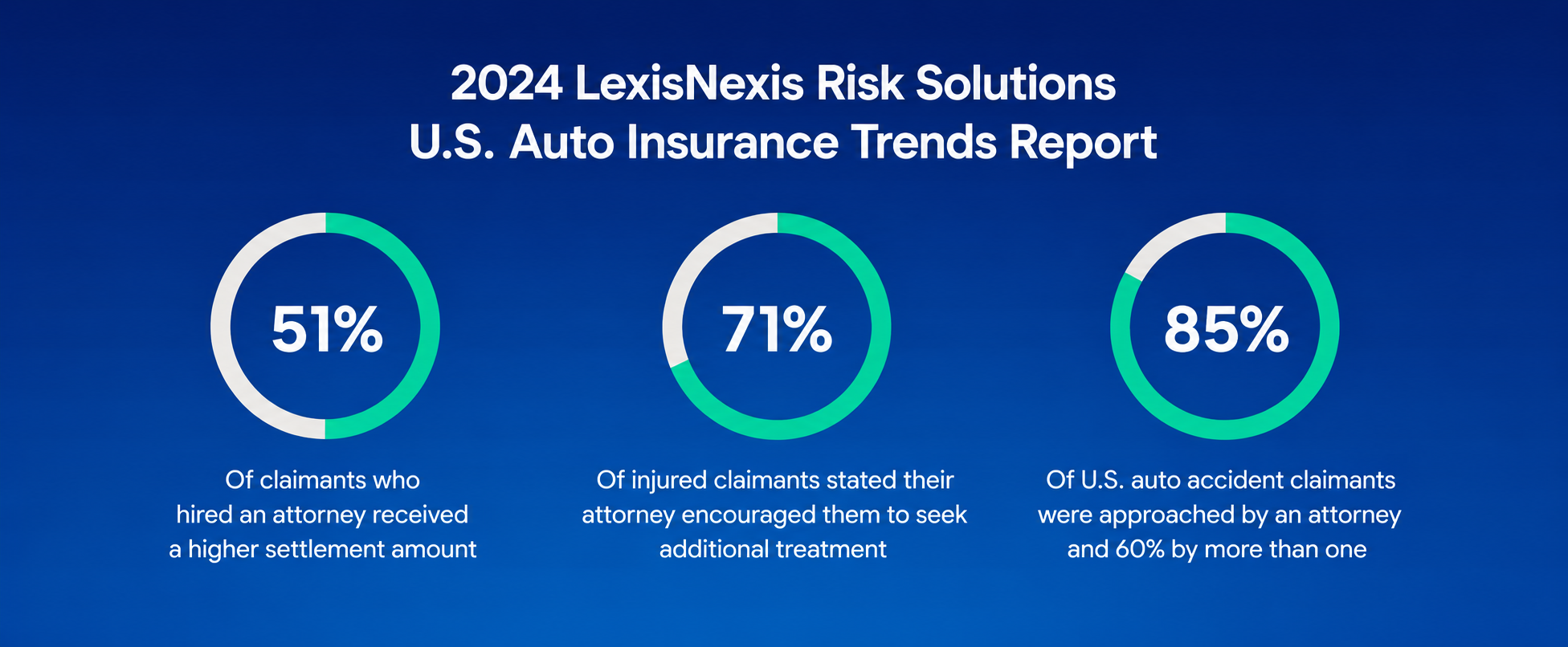
Advanced analytics, advertising and third-party funding have contributed to the growing complexity and chaos within the claims process. The result is a significant increase in the number of litigated claims as well as higher payouts.
- Nuclear verdicts: According to Insurance Thought Leadership, since 2015, the number of what are called “nuclear” verdicts (greater than $10 million) has increased over 295%. The median payout for a nuclear verdict was $44 million in 2023 compared with $39 million in 2021, reflecting a 6% annual increase.
- Historically high settlement payouts: Not only are insurers facing rising legal fees from the higher volume of litigated claims, they are also responsible for settlement payouts far above previous levels. Additionally, these costs inevitably impact premiums. Known as “tort tax” they can potentially erode customer trust. Industry regulatory influencers are working with lawmakers to address contributing factors that enable tort taxes.
- Third-party funding: Another issue that could lead to larger payouts is the rise in third-party funding. Third parties will invest in a case for a fee and in return the investor receives a cut of any settlement award. This industry is projected to reach $25.8B by 2030.
Three Proven Solutions to Simplify Claims Management
Many solutions promise to reduce the complexity of claims management—but at what cost and with what return? High-performing organizations ensure their specialized resources remain focused on mission-critical tasks. At the same time, they capitalize on opportunities to drive efficiency and enhance the overall effectiveness of claims operations. These three proven solutions eliminate unnecessary complexity, are easy to implement, and require minimal disruption or additional resources.
1. Employ the Integrate Once Approach
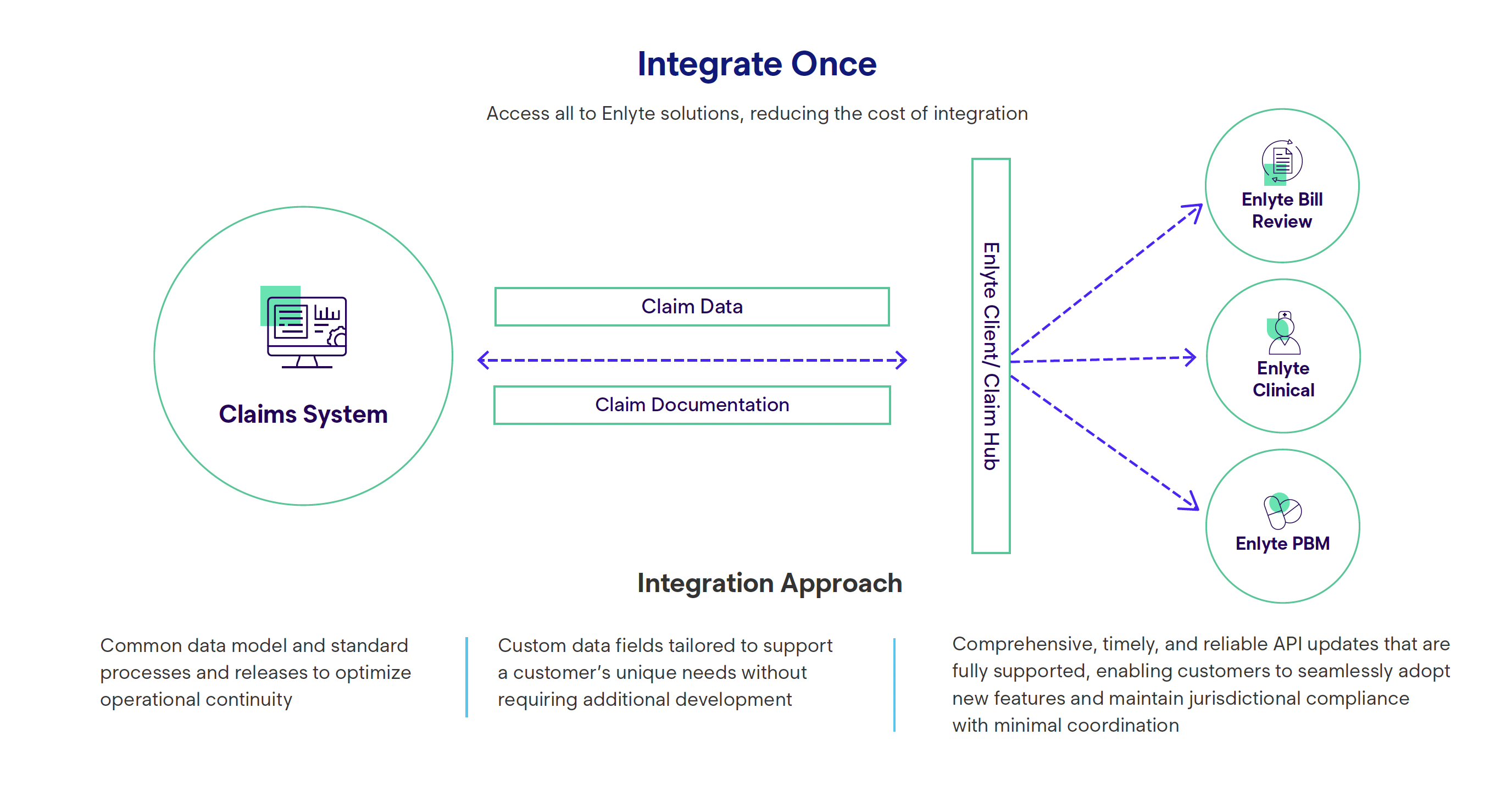
Integrating disparate technological solutions into a unified system is one of the most effective ways to reduce chaos in the auto claims process. Enlyte’s Integrate Once philosophy provides a streamlined, cost-effective method to access a suite of auto casualty solutions through a single integration point, reducing friction and time drains encountered when coordinating and communicating across multiple vendors and platforms.
Enlyte’s top priority is reducing business disruption, so insurers can restore lives and protect clients. That’s why we partner with Guidewire for a long-standing integration that continues to deepen as technology advances deliver more functionality and data exchange. This means quicker implementation and deployment, limiting disruption and IT lift. Once connectivity is established, your claims system and Enlyte’s data hub are at the center of seamless integration, sending and receiving claim data and documentation. This hub then connects to the suite of Enlyte solutions—bill review, clinical services, network solutions and pharmacy benefit management (PBM).
With this unique model, a single integration provides access to all necessary solutions, significantly reducing the complexity and cost typically associated with multiple integrations.
Enlyte’s integration approach has three main components:
- A common data model and standard processes to optimize operational continuity, ensuring smooth and consistent performance across all our solutions.
- Custom data fields enable adaptation to your unique needs without additional development from your IT resources.
- Full supported, comprehensive, timely and reliable API updates.
Enlyte’s Integrate Once approach simplifies the tech stack, reduces integration costs and provides a flexible solution that can adapt to an organization’s evolving needs.
2. Intelligent Outsourcing and Thorough Review
To address the complexity of assessing demand packages and reducing the risk of nuclear verdicts, insurers are advised to highly scrutinize demand packages submitted by sophisticated plaintiff attorneys. A thorough review process, analyzation and summarization to properly prepare for negotiations is cumbersome, for even the most experienced adjusters who can better spend their time restoring the lives of injured individuals. Outsourcing these time-consuming tasks is of the utmost importance to better prepare them for negotiations without losing valuable time sorting through complex documents.
The first step for the adjuster is to send the demand package to be dissected and put back together in a few short days with a summary report of the facts of the demand in an easy-to-read format. Enlyte takes care of the time-consuming review and analysis to give you both consistency in how demands are reviewed and time back for adjusters to focus on what matters most. Once the summary report is returned, your adjuster is well positioned to evaluate and negotiate the claim for a fast and fair settlement.
“The nurse’s findings were instrumental in empowering the adjuster to communicate with the plaintiff attorney about why the claim was not worth the $250k demanded. It built the adjuster’s confidence to derive a fair settlement amount and craft a strategy for negotiation. The clarity and specificity that comes with a nurse review is something everyone involved in the claim needs to have. We want the findings of a medical expert, especially when there are high limits.”
— Bodily Injury Resolution Leader, Auto Insurance Carrier
3. Utilizing AI to Create Untapped Efficiency
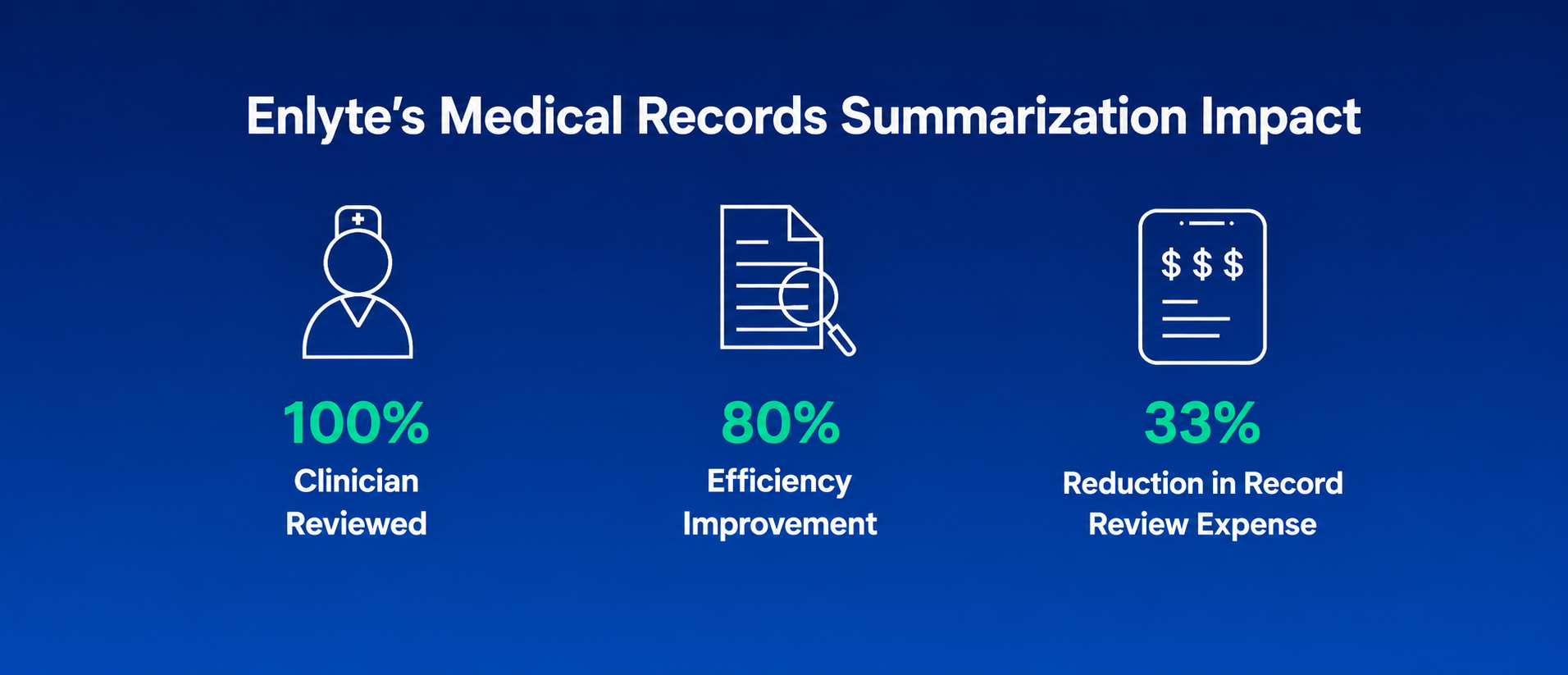
Claim adjusters understand the medical documentation in a claim can be staggering, especially for those who are not seasoned clinicians. Implementing AI-enhanced, clinician reviewed medical record summarization can lead to significant increases in efficiency and expense.
Enlyte’s AI-enabled Medical Records Summarization reduces accurate records summation turnaround time from hours to minutes. Medical record summarization is becoming a common accepted use of AI technology in the P&C industry.
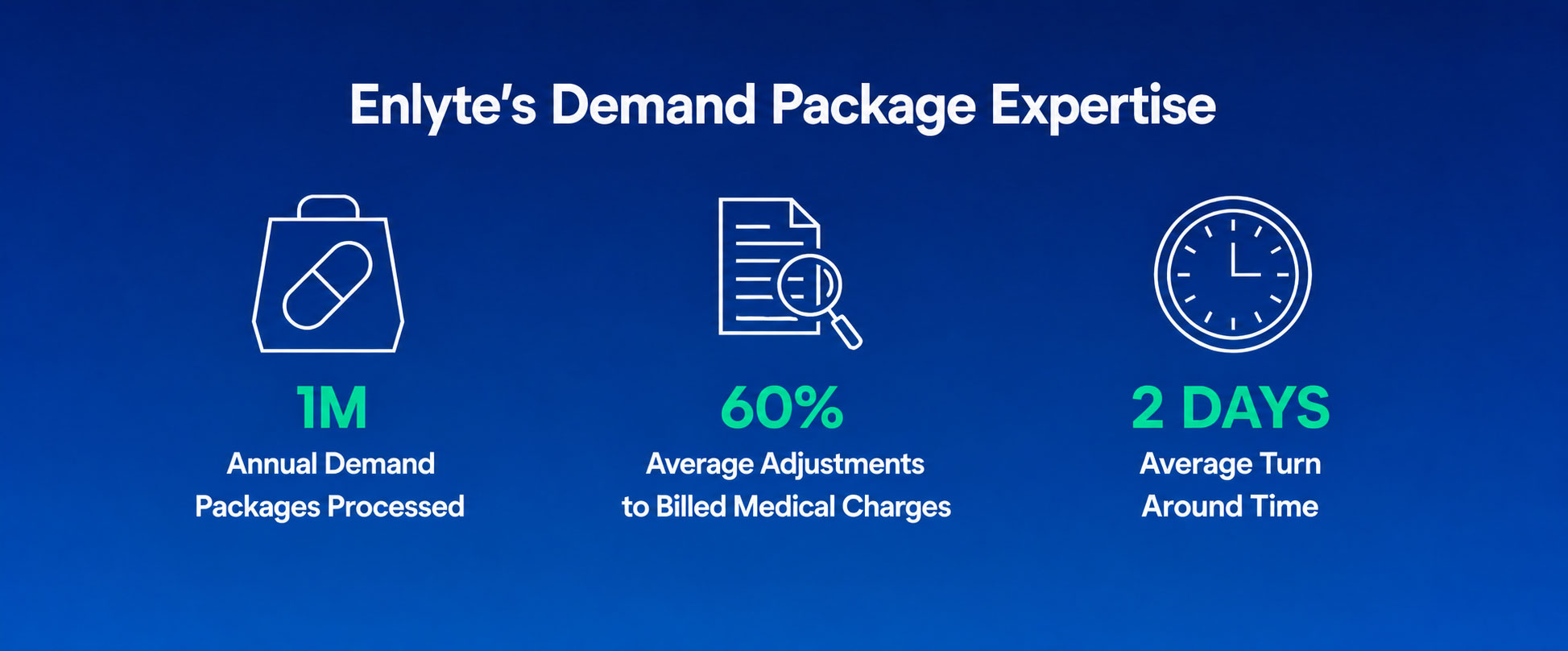
Not only can you reduce medical charges, through Enlyte’s Demand Package Review, by an average of 60%, but you can also reduce record review expenses by an average of 33%. Innovative AI solutions applied to auto casualty claims allow you to keep your valued clinical and attorney resources focused on the most challenging claims, while letting technology and clinical expertise aid your adjusters.
Case Studies: When AI Misses the Human Context
Technology is essential to modern claims processing but can fall short when detailed clinical judgment is needed. In these two claim examples, human clinical reviewers identified key factors that AI missed, changing the understanding of the case.
Case 1 | Overlooked Results
A claimant caused an accident when she lost control of her car and swerved into the next lane. The AI-generated summary gave no medical reasons for the accident. However, a human clinical reviewer noted lab results indicating severe anemia and high blood sugar levels, along with prior fainting episodes. These were key indicators that could explain how the accident occurred, but they were missed because the AI didn’t fully assess the lab data.
Case 2 | Handwritten Confusion
In another case, the AI-generated summary downplayed the claimant’s pain level, noting only “mild discomfort.” In contrast, the original handwritten medical notes described his pain as “horrible.” The discrepancy came from the AI’s inability to interpret cursive handwriting—a limitation with serious consequences for case evaluation.
AI doesn't always see the full picture. In these cases, the clinical reviewer found important medical details the AI missed, impacting the case resolution and proving why human judgment is still so important.

Conclusion
The auto casualty claims landscape is being reshaped by powerful forces—social inflation, increasing claim severity and the growing sophistication of plaintiff attorneys. These drivers have collectively introduced a level of complexity that threatens operational efficiency, cost control and customer trust. However, within this chaos lies opportunity.
Insurers that respond proactively—by embracing seamless technological integration, outsourcing time-intensive processes and leveraging AI-driven solutions—position themselves to not only regain control but also lead in a rapidly evolving market. Success in this new era of claims management requires more than resilience; it demands reinvention. With the right tools and partners, insurers can simplify complexity, unlock efficiency and ultimately deliver faster, fairer outcomes for all stakeholders.
Would you like this emailed to you?
More From Workers’ Comp