

How an Auto Carrier Saved Over 10,000 Employee Hours
Underperformance of medical bill straight-through processing leads to more manual touches, longer cycle times, and increased resources to stay compliant. For many carriers, this is happening alongside rising bill volumes and flat staffing, pushing operations beyond their limits.
A data-driven, configurable automation model overcomes these challenges by eliminating redundant work and freeing up capacity.

Problem
An auto carrier was under increasing pressure as straight-through processing failed to scale with rising bill volumes, pushing more work onto already constrained teams. Automation performance varied across workflows, and limited visibility into staffing productivity made it difficult to understand where effort was being spent and which workflow changes would impact manual touchpoints.
Key Challenges the Carrier Faced
- Excessive manual coding touches at the bill-line level, requiring additional handling and rework
- Underutilized straight-through processing, increasing manual touchpoints and limiting automation levels
- A year-over-year bill volume increase, putting added pressure on cycle times
- Limited real-time visibility into resource allocation, making it difficult to measure productivity or plan capacity
These challenges contributed to longer median days to pay and constrained the organization’s ability to absorb additional volume without additional resources and spend

Solution
The carrier partnered with Enlyte to apply advanced analytics and machine learning across millions of bills to pinpoint workflow waste and alleviate pressure on teams. The result was the elimination of unnecessary manual work through straight-through processing.
Rather than one-time rule updates, the engagement focused on configurable, iterative improvements aligned to real workflows, using ongoing performance data and stakeholder input. The approach included:
Data-Driven Analysis
- Applied machine learning models to analyze historical processing patterns and identify low impact touches and configurable automation opportunities
- Isolated workflow inefficiencies by state, queue, and rule intent
Operational Co-Design & Governance
- Partnered on system enhancements to provide real-time visibility into coder activity and productivity
- Held recurring stakeholder meetings to review configurable rule recommendations
This approach ensured changes were practical, measurable, and continually refined for sustained impact.

Key Results
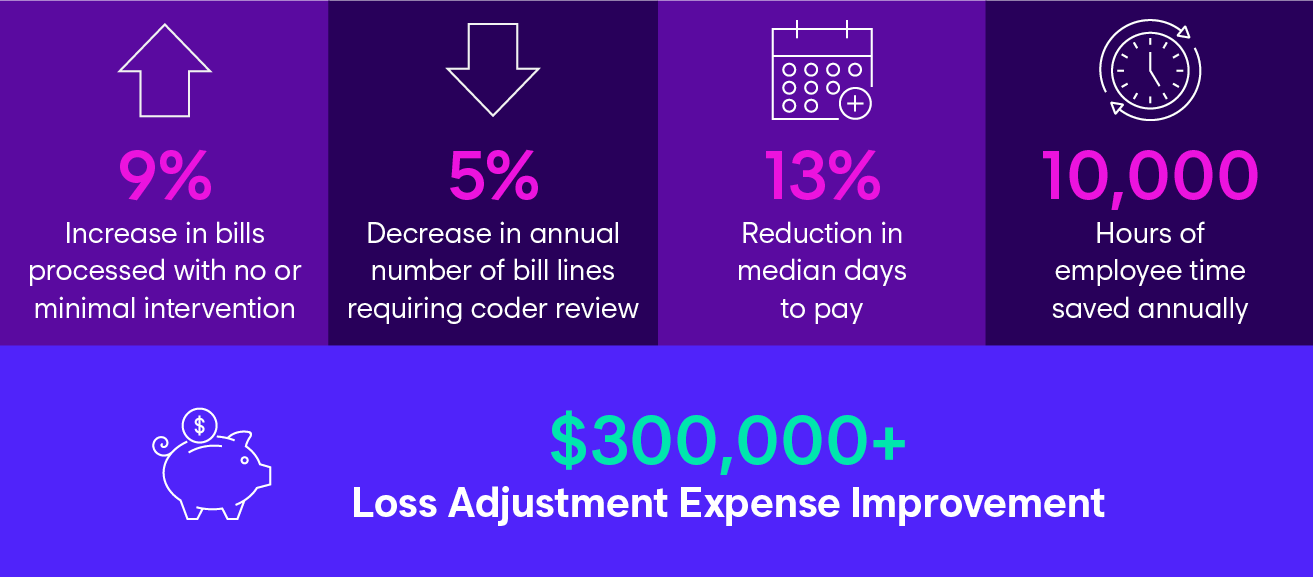
By moving from static rules to ongoing, data-led optimization, the carrier reduced unnecessary manual intervention while continuing to manage significant bill growth. Results stayed consistent month over month, cutting cycle time and administrative effort without adding headcount.
- Increased straight-through processing despite a year-over-year increase in bill volume
- Reduced manual coding touchpoints, freeing capacity within existing teams
- Lowered median days to pay
- Gained operational control and clearer visibility into automation performance and coder effort
Workflow Optimization Impact
Moving from Static Automation to Sustained Results
Many carriers start to notice the same patterns over time. Automation is in place, but it does not always deliver the impact they expected. As volume grows and teams stay lean, it becomes harder to see where effort is being spent, or which changes will move the needle.
Sustained performance gains do not come from one-time fixes or static rules. They come from continuous technology refinement based on analysis of real operational data A strategic, data-led approach to automation can help reduce workflow waste, stabilize cycle times, and create a foundation for scalable growth.
If your organization is facing similar challenges, work smarter, not harder. Instead, unlock the capacity you already have.
Unleash Your Automation’s Full Potential
Uncover the capacity within your existing systems.