

Evolving Access to Care: How Provider Supply and Network Stability Are Shaping Injured Individual Experiences in 2026

Kate Farley-Agee
Vice President, Product Management
Access to timely, appropriate medical care remains one of the most important drivers of recovery, claim progression, and overall experience for injured individuals. But in 2026, the access story is no longer defined solely by provider shortages. Instead, it is shaped by a more complex care environment in which provider mix, geography, health system dynamics, technology, new care access points and network stability all influence how and where care begins.
At the same time, access is becoming more directly tied to both cost and outcomes. Research continues to show that earlier access to care is associated with faster recovery, shorter disability durations, and improved overall claim performance. It is important to note in this environment, even small delays at the point of entry can have downstream implications across the life of a claim.
“Access to care is no longer just a network metric, it is a primary driver of claim cost and recovery outcomes.”
The structure of care delivery is also evolving. Over the past decade, physician involvement in first visits has declined while nurse practitioners and physician assistants have taken on a larger role in front-line care. In addition, telehealth, medical treatment guidelines and electronic medical records have streamlined care monitoring, while greater patient involvement in treatment can further improve efficiency and claim outcomes. This shift has expanded access in some markets but has also introduced more variability in how injured individuals enter the system. In parallel, care is increasingly delivered across a broader mix of settings, including urgent care, outpatient facilities, telehealth and specialty-first pathways.
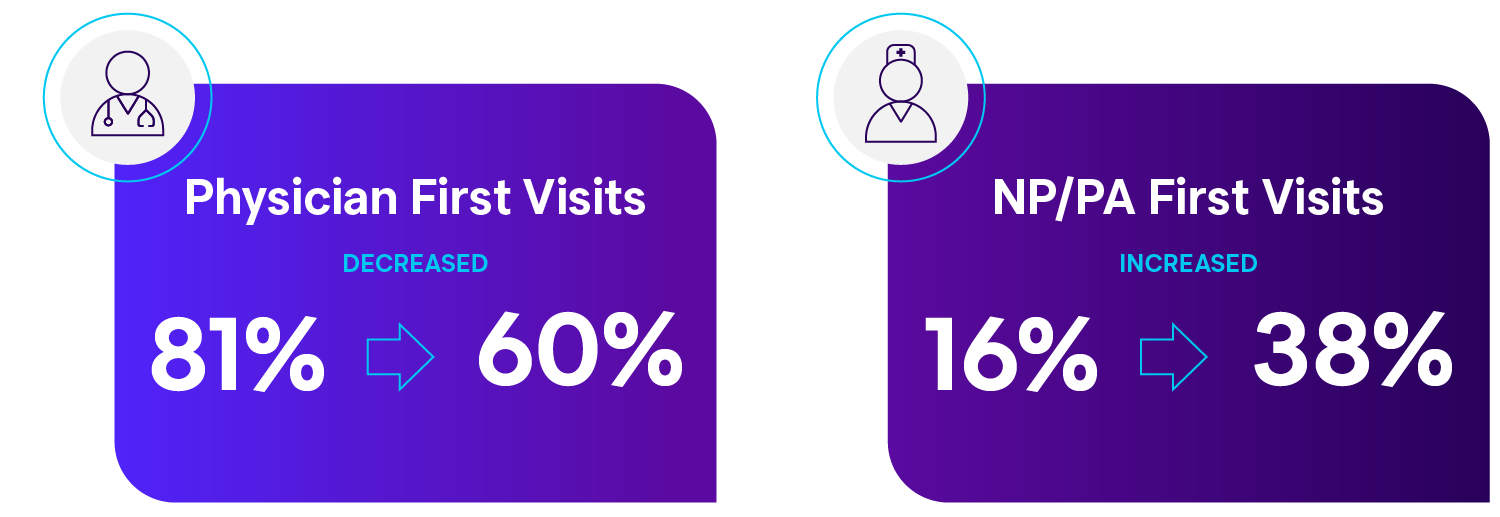
Sources: healthesystems.com, workcompcollege.com
“The challenge in 2026 is not simply access, it is the growing variability in how injured individuals enter and move through care.”
As a result, access is becoming less standardized. Two injured individuals with similar injuries may experience very different entry points into care depending on geography, provider availability, and standard care in local care models.
This growing variability is reinforcing an important trend: access alone is no longer enough. Consistency in how and where care is delivered is becoming the differentiator.
Provider participation and engagement are playing a central role in that consistency. Networks with stronger provider alignment and higher participation rates tend to deliver more stable access, fewer disruptions, and more predictable care pathways. Conversely, gaps in provider participation can lead to out-of-network utilization, delays in treatment, and increased administrative complexity.
“Provider participation is becoming one of the most important predictors of access stability.”
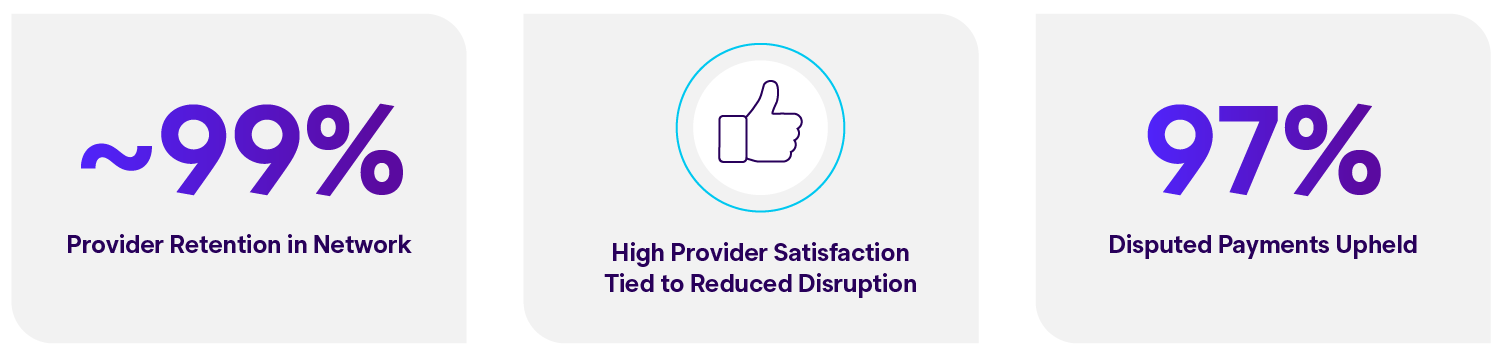
Source: Coventry Network Solutions Provider Network Data
This is particularly important as regulatory expectations around network adequacy, provider data accuracy, and geographic coverage continue to increase. Maintaining accurate provider data, ensuring sufficient coverage across regions, and sustaining provider participation are becoming foundational requirements within networks, not operational enhancements.
At the same time, access is increasingly linked to the broader question of total claim performance. Total claim cost is influenced by far more than the amount paid on a single bill. Provider selection, treatment patterns, medical treatment guidelines, care duration, and return-to-work outcomes all play a significant role.
“Total claim cost is driven as much by care pathways as it is by reimbursement levels.”
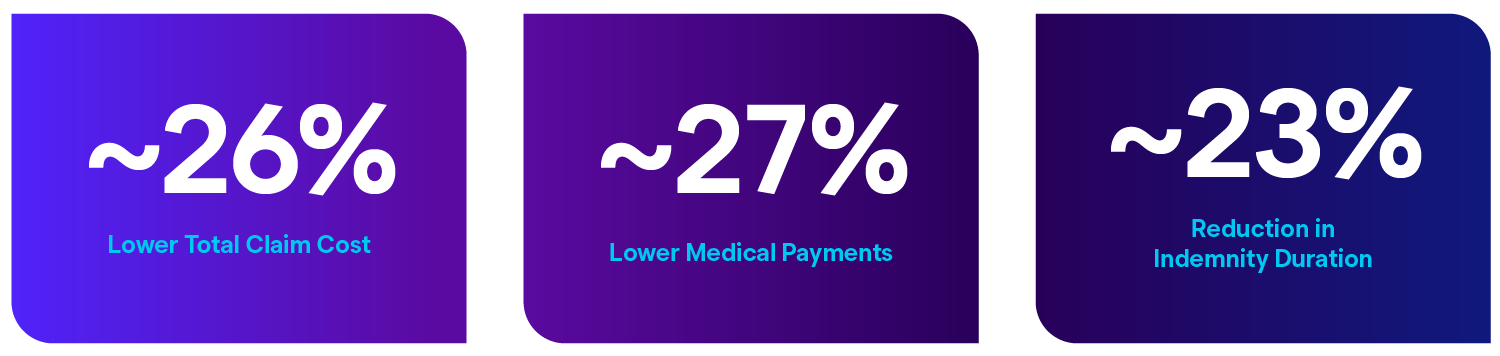
Source: Impact of Networks on Claim Outcomes, WCRI
This connection is shifting how access is evaluated. The focus is moving beyond whether care is available to whether the available care is likely to produce consistent, efficient, and coordinated outcomes.
Aligned provider networks help support this consistency by creating more predictable care pathways. When providers operate within a connected system with established expectations, referrals are more consistent and efficient, care coordination improves, and variation is reduced across the claim lifecycle.
Stronger alignment also contributes to reduced friction across the claims process. Environments with clearer expectations and more established provider relationships are associated with fewer disputes, lower litigation rates, and more efficient claim resolution. Networks provide this structure and efficiency to the claim lifecycle.
“Alignment across providers and payers reduces friction, disputes, and ultimately litigation.”
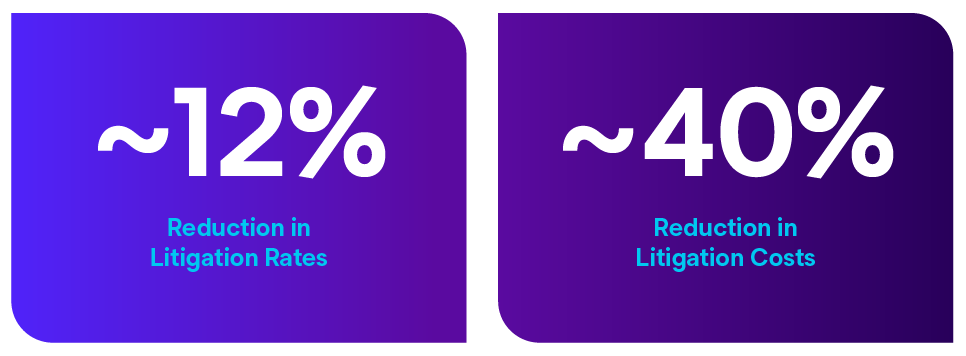
Source: Impact of Networks on Claim Outcomes, WCRI
These dynamics highlight a broader shift underway in 2026. The access challenge is no longer just about supply. It is about managing variability across a more fragmented care landscape while maintaining consistency in outcomes.
Organizations that actively monitor provider participation, strengthen local provider engagement, maintain accurate provider data, and anticipate emerging access gaps are better positioned to deliver stable and predictable experiences despite continued market disruption.
“The organizations that win in 2026 will not have the most access, they will have the most consistent access.”
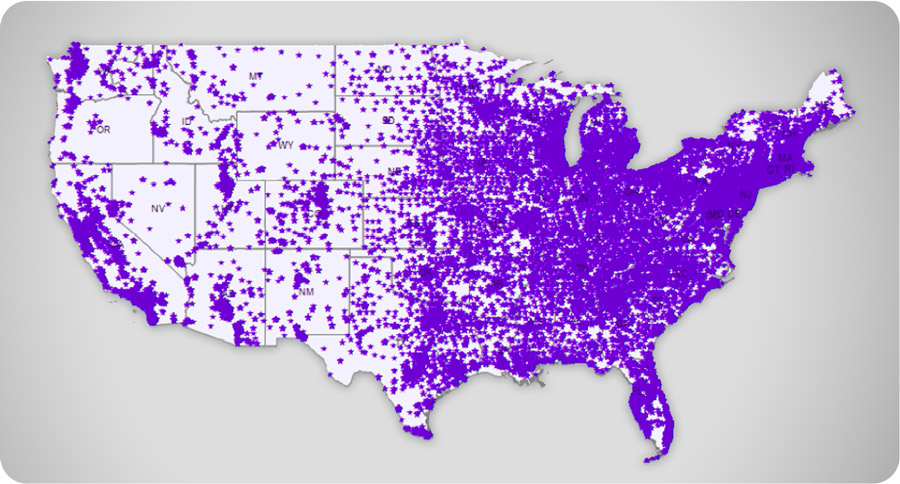
Coventry Integrated Network Primary Treating Network Coverage Map

Coventry Integrated Network Specialty Provider Network Coverage Map
Key Takeaways for Claims Leaders
- Access to care is now a primary driver of claim outcomes. Even small delays at the point of entry can increase duration, cost, and friction across the life of a claim
- The access challenge in 2026 is variability, not supply. Injured individuals with similar injuries can experience very different care pathways based on provider mix, geography, and local care models
- Consistency of access matters more than access alone. Stable, predictable entry points and places of service drive better recovery and claim performance
- Provider participation and engagement are critical to access stability. Higher participation and retention reduce out‑of‑network care, disruptions, and administrative complexity
- Access decisions shape total claim cost, not just medical spend. Provider selection and care pathways materially influence duration, indemnity outcomes, and litigation risk
- Aligned provider networks reduce friction and disputes. Clear expectations and stronger relationships support smoother claims, fewer disputes, and more predictable outcomes